
How to Choose a Dog Walker for Your Bernedoodle: Tips for Safe and Reliable Care
Finding the right dog walker can make everyday life easier for Bernedoodle owners. Whether you work long hours, have a busy schedule, or simply want your dog to enjoy additional outdoor activity, a reliable dog walker can provide valuable support.
Bernedoodles are often affectionate, intelligent, and eager to spend time with people. However, every dog has individual needs, preferences, and behaviors. Choosing someone to care for your Bernedoodle while you are away requires more than finding a person who enjoys dogs. You need someone who understands canine behavior, follows your instructions, prioritizes safety, and can build a positive relationship with your pet.
A good dog walker can help maintain your dog’s routine, provide opportunities for exercise and sniffing, and reinforce the manners you are teaching at home. The wrong match, on the other hand, can create unnecessary stress or make existing training challenges more difficult.
Before hiring a dog walker, it helps to understand what your Bernedoodle needs, which questions to ask, and how to prepare your dog for the experience.
Understand Your Bernedoodle’s Individual Needs
Before searching for a dog walker, take time to consider your dog’s age, temperament, physical condition, and training progress.
A young Bernedoodle puppy will have different needs from a fully grown adult. Puppies need frequent bathroom breaks, short periods of activity, opportunities to explore, and plenty of rest. They may also need additional guidance when encountering unfamiliar people, dogs, vehicles, and outdoor environments.
Adult Bernedoodles may benefit from longer walks, depending on their health, energy level, and usual activity routine. Some enjoy exploring new routes, while others feel more comfortable following familiar paths.
Your dog’s temperament also matters. An outgoing Bernedoodle may eagerly approach new people, while a more cautious dog may need time to become comfortable with a new caregiver.
Think about how your dog responds to other dogs, unfamiliar people, traffic, loud noises, and unexpected changes. If your Bernedoodle pulls on the leash, becomes nervous around strangers, or struggles with distractions, share that information before the first walk.
A professional dog walker should be willing to learn about your dog’s individual needs rather than assuming every Bernedoodle behaves the same way.
Look for Experience With Dogs Similar to Yours
Dog walking experience is valuable, but the type of experience matters.
Someone who regularly walks calm adult dogs may not have the same skills as someone who works with energetic puppies, large dogs, or dogs that need additional support with leash manners.
When interviewing a potential dog walker, ask about their experience with medium and large dogs, puppy behavior, leash training, and managing distractions in public spaces.
Bernedoodles can vary considerably in adult size and strength. Depending on their parentage, some may grow into large dogs that require a handler who can maintain control without relying on force.
A suitable dog walker should understand how to manage a leash safely, recognize signs of stress, and respond calmly when a dog becomes excited or frightened.
Ask for examples of situations they have handled successfully. For instance, what would they do if another dog approached unexpectedly? How would they respond if your Bernedoodle became frightened by construction noise? What would happen if your dog refused to continue walking?
Their answers can help you determine whether their approach matches your expectations.
Check References, Reviews, and Professional Credentials
Before trusting someone with your Bernedoodle, take time to verify their background.
Read reviews from previous clients and look for consistent feedback about reliability, communication, professionalism, and how the person handles animals.
Whenever possible, ask for references from current or former clients. A brief conversation with another dog owner may provide useful information that an online profile does not reveal.
Depending on your location, you may also want to ask whether the dog walker has relevant pet first-aid training, liability insurance, and any required business registration or local credentials.
These details do not automatically guarantee excellent service, but they can demonstrate that the person takes their responsibilities seriously.
It is also reasonable to ask how they handle emergencies. Do they know where the nearest veterinary clinic is? How would they contact you if your dog became injured? What procedures do they follow if a leash breaks or a dog slips out of its equipment?
A professional should answer these questions clearly and should not make you feel uncomfortable for asking.
Arrange a Meet-and-Greet Before the First Walk
A meet-and-greet is one of the most useful steps when selecting a dog walker.
Invite the potential walker to meet your Bernedoodle in a familiar environment before arranging a regular service. This gives you an opportunity to observe how they approach your dog and whether your dog appears comfortable around them.
The walker should allow your dog to approach at its own pace rather than immediately reaching over its head, grabbing its collar, or insisting on physical contact.
Some dogs become excited when meeting new people. Others may initially keep their distance. Both responses can be normal, and the goal should be to create a calm, positive introduction.
During the meeting, explain your dog’s routine, feeding schedule if relevant, bathroom habits, preferred walking equipment, and any known fears or behavior concerns.
Show the walker how your Bernedoodle responds to basic cues such as sit, wait, come, and leave it. If your dog is still learning these behaviors, explain what commands and rewards you use.
Consistency between the home and the walking routine can help your dog understand expectations.
If possible, arrange a short supervised walk together. This lets you see how the walker holds the leash, responds to distractions, and communicates with your dog before you leave them together.
Choose the Right Walking Arrangement
Dog walking services may offer private walks, shared walks, or group outings. The best option depends on your Bernedoodle’s personality, training, and comfort around other dogs.
Private walks provide individual attention and allow the walker to focus on your dog’s pace, bathroom needs, and training goals. They can be especially useful for puppies, dogs that are nervous around unfamiliar animals, and dogs that need help practicing leash manners.
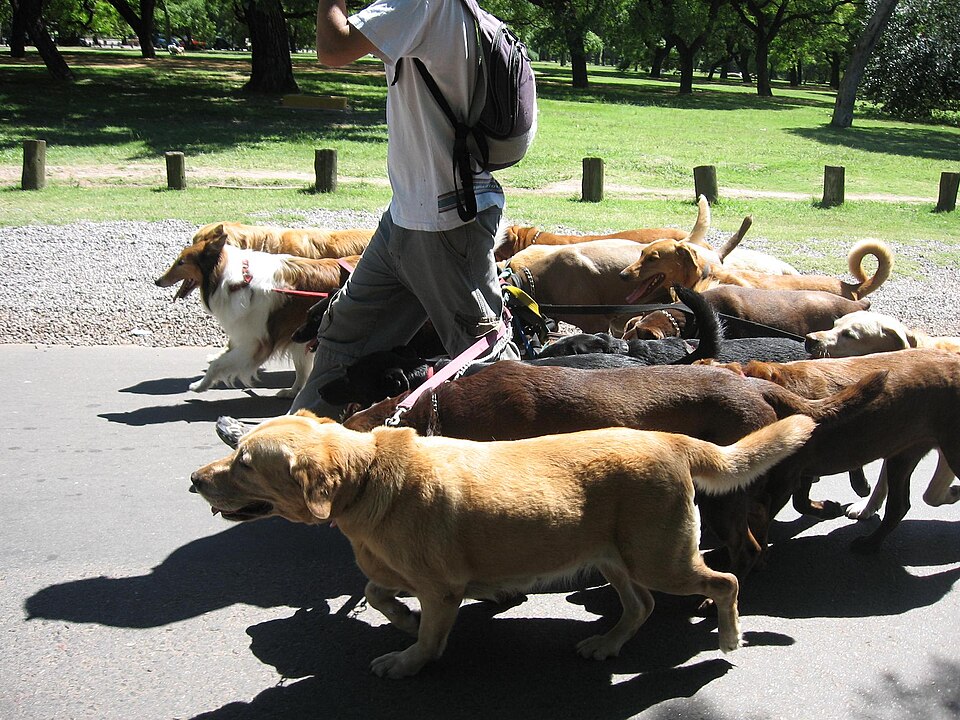
Group walks may provide social exposure and activity, but they also introduce additional variables. Several dogs walking together can become excited, compete for space, or react to unexpected distractions.
A dog should not be placed into a group simply because the breed is considered friendly. Compatibility, supervision, training, and the group’s size all matter.
Ask how many dogs the walker handles at once, how the dogs are matched, and what happens if one dog becomes uncomfortable or reactive.
Also clarify whether the walker allows off-leash activity. Unless you have specifically agreed to an appropriate, secure setting and the arrangement is suitable for your dog, walks should follow your instructions about leash use and safety.
For many Bernedoodle owners, starting with private walks is a practical way to build trust before considering other arrangements.
Discuss Leash Safety and Walking Equipment
Proper leash handling is essential for keeping your Bernedoodle safe.
Before the first walk, show the walker which collar, harness, and leash your dog normally wears. Make sure the equipment fits correctly and is in good condition.
Some dogs walk comfortably with a well-fitted harness, while others use different equipment based on their needs and training. If you have concerns about equipment selection, your veterinarian or a qualified, reward-based trainer can help you evaluate suitable options.
The walker should never assume that your dog can be safely walked using equipment they have not checked.
Discuss how the walker will handle situations involving loose dogs, busy roads, cyclists, unfamiliar people, and other distractions. Your dog should remain under appropriate control, and walks should avoid situations that exceed its training or comfort level.
Make sure the walker has your current contact information and knows how to reach you if something goes wrong.
It is also helpful to establish clear rules about retractable leashes, off-leash areas, dog parks, and interactions with unfamiliar dogs. If you do not want your Bernedoodle greeting other animals during walks, communicate that expectation clearly.
The right dog walker will respect your safety preferences and follow an agreed-upon plan.
Explain Your Bernedoodle’s Training Cues and Behavior
A dog walker can become an important part of your Bernedoodle’s daily routine, but inconsistent handling may make training more difficult.
Before the first walk, explain the cues your dog understands and the behaviors you are currently working on.
For example, if you are teaching your Bernedoodle not to pull, explain how you respond when the leash becomes tight. If your dog is learning to ignore distractions, tell the walker which rewards and cues have been effective.
Reward-based training can help reinforce desirable behaviors without creating unnecessary fear or confusion. A dog walker should understand the importance of rewarding calm behavior, maintaining appropriate distance from triggers, and avoiding confrontational handling.
Be honest about challenges such as jumping, barking, pulling, or fear of unfamiliar dogs. Withholding this information can create preventable problems.
If your Bernedoodle has a history of biting, escaping, severe fear, or significant reactivity, explain the situation before booking. You may need a qualified trainer or behavior professional in addition to a dog walker.
A dog walker can support established training goals, but they should not be expected to resolve complex behavioral problems without appropriate qualifications and a suitable plan.
Create a Clear Walking Schedule
Consistency can make the dog-walking experience easier for both you and your Bernedoodle.
Decide how often you need help and whether you prefer the same time each day. Some owners arrange weekday walks while they work, while others need occasional support during particularly busy periods.
Consider your dog’s usual bathroom schedule, meal times, sleep routine, and energy level when planning appointments.
Puppies may need shorter, more frequent outings than adult dogs. Older dogs or dogs with mobility concerns may benefit from slower walks and additional opportunities to rest.
Discuss what happens if the walker is delayed or needs to cancel. A dependable service should have a clear communication process and realistic expectations about scheduling.
It is also helpful to establish what the service includes. Confirm the expected walk duration, whether travel time is included, how bathroom breaks are handled, and whether you will receive an update afterward.
Avoid assuming that a booked thirty-minute service means thirty minutes of continuous walking. Ask how the time is used and whether the walker adjusts the pace to suit the dog.
A clear agreement prevents misunderstandings and helps you determine whether the service meets your Bernedoodle’s needs.
Prepare Your Home for Dog Walker Visits
If the dog walker will collect your Bernedoodle from your home, make the handoff process simple and secure.
Provide clear instructions for entering and leaving the property. Make sure gates, doors, and fencing are secure, and explain any household rules that affect the walk.
Keep your dog’s leash, harness, waste bags, and other necessary supplies in a consistent location. If your dog receives treats during walks, explain which treats are appropriate and whether there are any dietary restrictions.
Tell the walker where your dog should wait while equipment is being attached. If your Bernedoodle tends to rush through open doors, ask the walker to follow your established routine for safe exits.
If other pets live in the home, explain how they should be managed during pickup and drop-off. The walker should not be expected to improvise around unfamiliar animals or household arrangements.
You may also want to provide written emergency instructions, your veterinarian’s contact information, and the name of an alternative emergency contact.
These preparations can make each visit more predictable and reduce the chance of mistakes.
Monitor Your Bernedoodle After Walks
Once the walking arrangement begins, pay attention to how your dog responds.
A successful walk may leave your Bernedoodle relaxed, satisfied, and ready to rest. However, behavior can vary depending on the activity level, weather, and experiences encountered along the way.
Watch for repeated signs of distress, unusual fatigue, limping, damaged equipment, or changes in behavior following walks. If something concerns you, discuss it with the walker and contact your veterinarian when appropriate.
Ask for updates about bathroom breaks, the route taken, encounters with other dogs, and any unusual events. Some walkers provide written reports or photographs, while others communicate through messages.
Communication should be useful rather than excessive. The important point is that you have enough information to understand how your dog is doing and whether the service remains appropriate.
If your Bernedoodle seems consistently uncomfortable with a particular walker, do not ignore those concerns. Consider whether the issue involves the individual, the walking environment, the timing, or an experience that needs further investigation.
Likewise, if the walker reports a problem, take the information seriously and work together to determine a suitable next step.
Review the arrangement periodically as your dog matures and its needs change.
Recognize When a Dog Walker Is Not the Right Fit
Even a person with excellent references may not be the best match for every dog.
Warning signs include ignoring your instructions, refusing to answer reasonable safety questions, using handling methods you have not approved, or failing to communicate about schedule changes.
You should also be cautious if a walker regularly allows unsafe interactions, takes dogs off-leash without permission, or dismisses signs that your Bernedoodle is frightened or overwhelmed.
Another concern is a lack of transparency about where your dog goes or how many animals are included in a walk.
Trust your observations, ask direct questions, and look for clear explanations rather than vague reassurance.
If the arrangement does not meet your expectations, you can discuss the problem and establish whether it can be corrected. If safety or trust remains a concern, finding another caregiver may be the best decision.
Your Bernedoodle depends on you to make decisions that protect its well-being.
Final Thoughts on Choosing a Dog Walker for Your Bernedoodle
A reliable dog walker can be a valuable addition to your Bernedoodle’s care routine. The right person can provide exercise, bathroom breaks, opportunities to explore, and reinforcement of the manners your dog is learning at home.
Choosing a walker requires careful consideration of experience, communication, safety practices, and compatibility with your dog’s individual temperament. A meet-and-greet, supervised introductory walk, reference checks, and a clear written agreement can help you make a more confident decision.
Remember that Bernedoodles vary in size, coat, energy level, and personality. The ideal walking arrangement should reflect your dog’s actual needs rather than assumptions about the breed.
At Montana Berners in Greycliff, Montana, preparing families for responsible Bernedoodle ownership means recognizing that good care extends beyond feeding, grooming, and veterinary appointments. Daily routines, appropriate exercise, and dependable support can also contribute to a dog’s quality of life.
By choosing a qualified, trustworthy dog walker and communicating your expectations clearly, you can help your Bernedoodle enjoy safer outings and a more consistent daily routine.
Read Next: Bernedoodle Myths vs. Facts: What Every Future Owner Should Know