
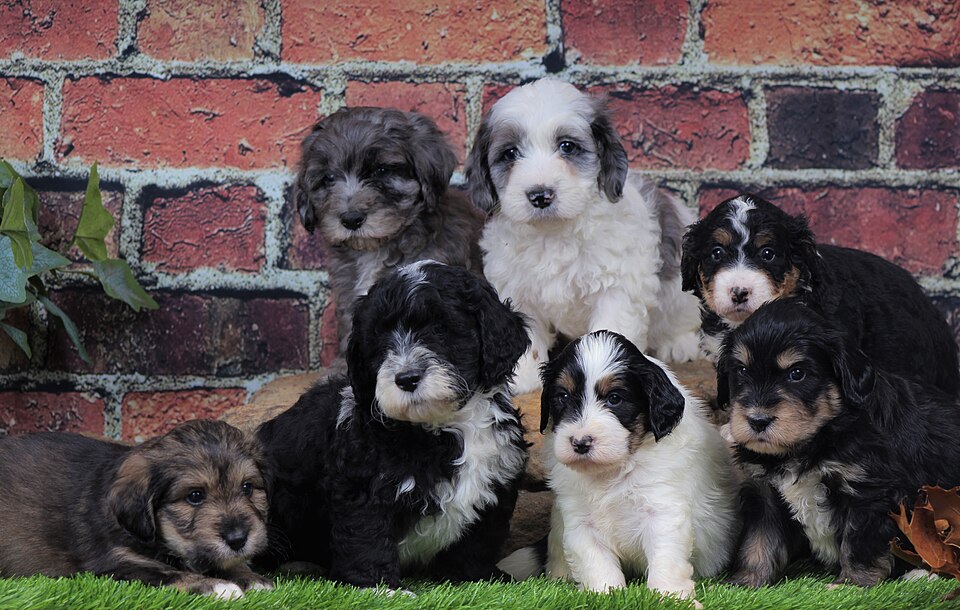
Bernedoodle Myths vs. Facts: What Every Future Owner Should Know
Bernedoodles have become a popular choice for families looking for an affectionate, intelligent, and people-oriented companion. By combining the Bernese Mountain Dog and the Poodle, breeders aim to bring together qualities that many dog lovers appreciate, including a friendly temperament, a strong desire for companionship, and a variety of coat types.
However, as Bernedoodles become more popular, misconceptions about the breed can make it difficult for prospective owners to know what to expect. Some people assume every Bernedoodle has the same personality, that all Bernedoodles are hypoallergenic, or that their intelligence makes training effortless. Others underestimate the time, exercise, grooming, and long-term commitment these dogs require.
Understanding the difference between common myths and realistic expectations can help families make informed decisions before bringing a Bernedoodle home.
At Montana Berners, responsible breeding and owner education are important parts of helping families understand their future companion. Learning about the breed’s potential strengths and challenges is an important first step toward a successful relationship.
Myth 1: Every Bernedoodle Is Hypoallergenic
One of the most common misconceptions about Bernedoodles is that every dog has a hypoallergenic coat. Because Poodles are often associated with lower-shedding coats, some people assume that crossing a Poodle with a Bernese Mountain Dog guarantees a puppy that will not trigger allergies.
The reality is more complicated.
Dog allergies are commonly associated with proteins found in dander, saliva, and other materials. Hair and shedding can contribute to how these allergens spread around a home, but shedding alone does not determine whether a person will experience symptoms.
Bernedoodles can inherit different coat characteristics from their parents. Some have furnished coats that grow facial furnishings and may be curly or wavy. Others have unfurnished coats that can resemble the straighter coat of a Bernese Mountain Dog and may shed more noticeably.
Even puppies within the same litter can have different coat characteristics.
For people with dog allergies, spending time around a particular dog before making a commitment may help them understand their potential reaction. However, no breeder can guarantee that a Bernedoodle will be allergy-free.
The fact is that Bernedoodles can have different shedding patterns, and individual allergic reactions vary. Families should consider coat genetics, grooming requirements, and their own sensitivities rather than relying on the breed name alone.
Myth 2: All Bernedoodles Have the Same Temperament
Bernedoodles are often described as friendly, affectionate, intelligent, and loyal. These qualities can make them wonderful companions, but it is important to remember that individual dogs have individual personalities.
A Bernedoodle’s temperament can be influenced by genetics, early experiences, socialization, training, and its environment. Some dogs may be naturally outgoing and eager to meet new people. Others may be more reserved and need additional time to feel comfortable in unfamiliar situations.
Even dogs from the same litter may differ in confidence, activity level, sensitivity, and willingness to explore new environments.
Prospective owners should also remember that a puppy’s behavior can change as it matures. A confident young puppy may become more cautious during adolescence, while a quieter puppy may become more outgoing as it gains experience.
Responsible breeders work to understand the temperaments of their breeding dogs and provide puppies with appropriate early experiences. However, no breeder can guarantee every aspect of a dog’s future personality.
The fact is that Bernedoodles often have many appealing companion-dog qualities, but their temperament should never be treated as identical from one dog to another. Families can encourage positive behavior through patient training, thoughtful socialization, and consistent daily routines.
Myth 3: Bernedoodles Are Easy to Train Because They Are Intelligent
Bernedoodles can be intelligent learners, and many respond well to reward-based training. Their ability to learn commands and routines can make training enjoyable for owners who use consistent methods.
However, intelligence does not automatically make a dog easy to train.
A dog may understand a command but still become distracted by another dog, an unfamiliar person, a strong smell, or an exciting environment. Puppies also have limited attention spans and need frequent opportunities to rest, play, explore, and learn.
Some Bernedoodles may be independent or easily distracted during certain developmental stages. Others may become overly excited when greeting people or struggle to remain calm when visitors arrive.
Successful training requires more than teaching a dog to recognize a word. Owners must help the dog practice the desired behavior in different environments and gradually increase distractions.
Short, positive sessions are often more effective than long sessions that leave a puppy frustrated or tired. Rewarding desirable behavior immediately can help the dog understand which actions are being encouraged.
Basic training should include name recognition, recall, leash manners, polite greetings, settling calmly, and learning to be comfortable when briefly separated from family members.
The fact is that intelligence can support learning, but consistent practice and clear communication remain essential. Bernedoodles benefit from owners who make training a regular part of everyday life.
Myth 4: A Bernedoodle Puppy Will Stay Small If Its Parents Are Small
Some prospective owners focus heavily on a puppy’s size when choosing a Bernedoodle. While the size of the parents can provide useful information, it does not guarantee that every puppy will reach a particular adult weight.
Adult size depends on several factors, including the sizes of the parent dogs, inherited genetics, and individual growth patterns. Even puppies from the same litter may mature at different rates.
A puppy that appears small at eight weeks may experience a different growth pattern from one of its siblings. Early weight alone cannot provide a perfectly reliable prediction of adult size.
Before choosing a Bernedoodle, families should ask the breeder about the adult sizes of the parents, the sizes of previous litters when relevant, and the expected range for the current litter.
It is also important to prepare for the possibility that a dog may grow larger or smaller than expected.
Size affects practical decisions such as crate dimensions, transportation, exercise equipment, food expenses, and the amount of room a dog needs to move comfortably. Families should choose a puppy whose likely adult size fits their living arrangements and lifestyle rather than relying on a single estimated number.
The fact is that breeders can offer informed estimates, but adult size cannot be guaranteed precisely. Planning for a reasonable range is more practical than expecting an exact weight.
Myth 5: Bernedoodles Do Not Shed
Another common misconception is that Bernedoodles never shed. This belief is often connected to the Poodle’s coat, but Bernedoodles can inherit a range of coat characteristics.
Some have furnished coats that are curly or wavy and may shed less visibly. Others have unfurnished coats that are straighter and may shed more like a Bernese Mountain Dog.
A low-shedding coat does not mean a maintenance-free coat. Curly and wavy hair can trap loose hairs within the coat, making shedding less noticeable while increasing the risk of tangles and mats.
Coat development can also change as a puppy matures. The coat a young puppy has may not look exactly the same once the adult coat develops.
At Montana Berners, coat genetics are an important consideration, and newborn puppies are genetically tested for coat type. This information can help families better understand the coat characteristics a puppy is expected to inherit.
Even with genetic information, owners should understand that day-to-day coat care requires regular attention.
The fact is that shedding varies among Bernedoodles. Prospective owners should ask specific questions about coat genetics and prepare for the grooming routine that matches their dog’s coat.
Myth 6: Bernedoodles Do Not Need Much Exercise
Because Bernedoodles are often known for their affectionate personalities, some people imagine that they are content to spend most of the day relaxing indoors.
While many Bernedoodles enjoy lounging with their families, they also need appropriate physical activity and mental stimulation.
Exercise needs vary with age, size, health, and individual temperament. A growing puppy should not be expected to follow the same exercise routine as a healthy adult dog. Young dogs need opportunities to move and explore, but owners should avoid excessive forced exercise while their puppies are still developing.
Daily activities may include walks suited to the dog’s age, supervised play, sniffing opportunities, training games, and age-appropriate enrichment.
Mental activity is equally valuable. Practicing basic commands, searching for hidden treats, working with food puzzles, and exploring safe new environments can provide useful stimulation.
Without enough activity and engagement, some dogs may become restless, demand attention, or find their own entertainment through unwanted behaviors.
At the same time, more exercise is not always better. Owners should watch for signs of fatigue, provide water and rest, and adjust activity during hot weather.
The fact is that Bernedoodles need a balanced routine that combines exercise, mental engagement, companionship, and adequate rest. Their needs should be assessed as individuals rather than based on assumptions about the breed.
Myth 7: Bernedoodles Are Automatically Good With Children
Bernedoodles are often considered for family homes because they can be affectionate and people-oriented. However, no dog should be assumed to be automatically comfortable with every child or every type of interaction.
Children can move quickly, make sudden noises, hug dogs tightly, or approach them while they are sleeping or eating. Even a patient dog can become uncomfortable when its boundaries are ignored.
Teaching children how to interact respectfully with dogs is just as important as teaching dogs how to behave around children.
Children should learn to avoid pulling ears or tails, climbing on dogs, disturbing them during meals, or chasing them when they try to move away. Adults should supervise interactions, particularly with young children and puppies.
Dogs should always have access to a quiet resting area where they can retreat without being followed. Adults should also pay attention to signs of discomfort, such as turning away, repeatedly licking the lips, yawning in a stressful situation, stiffening, or attempting to leave.
These signals should be taken seriously rather than dismissed as stubbornness.
The fact is that a well-managed relationship between children and a Bernedoodle depends on supervision, training, respectful handling, and the individual dog’s temperament. Families should never rely on breed reputation as a substitute for safe interactions.
Myth 8: A Bernedoodle Can Be Left Alone All Day Without Preparation
Bernedoodles are often valued for their close relationships with their families. That affectionate nature can be wonderful, but it also means owners should thoughtfully teach their dogs how to spend time alone.
A puppy that has constant company from the beginning may struggle when its owner suddenly leaves for several hours. Whining, barking, pacing, destructive chewing, or attempts to escape can sometimes indicate that the dog is having difficulty coping with separation.
Not every Bernedoodle develops separation-related problems, but gradual preparation can help reduce the risk.
Owners can begin by encouraging puppies to relax independently while people are still at home. Short periods in a safe area, calm departures, and gradual increases in alone time can help the puppy learn that separation is temporary.
A comfortable resting space, suitable enrichment, and predictable routines may also help. However, food puzzles and toys should be selected according to the dog’s age, chewing habits, and safety needs.
Very young puppies need frequent bathroom breaks, meals, supervision, and social interaction. They should not be expected to remain alone for a full workday without an appropriate care plan.
Depending on the dog’s age and needs, owners may need help from a trusted pet sitter, dog walker, family member, or other suitable caregiver.
The fact is that Bernedoodles can learn to spend time alone, but comfort with separation should be developed gradually. Planning for care during long absences is part of responsible ownership.
Myth 9: Bernedoodles Do Not Need Regular Grooming If They Have Short Hair
Grooming needs are determined by more than coat length. Even a Bernedoodle with a relatively short coat may need regular brushing, bathing when appropriate, nail trimming, ear care, and routine checks for tangles or skin irritation.
Curly and wavy coats can develop mats when loose hair becomes tangled. Areas behind the ears, beneath the collar, around the legs, and under the tail deserve particular attention.
Unfurnished coats may shed more, but they still benefit from regular brushing and general coat care.
Owners should introduce grooming gradually during puppyhood. Gentle handling of the paws, ears, face, and body can help a dog become more comfortable with routine maintenance.
Rewarding calm behavior during short grooming sessions can make the process more positive. If a dog becomes distressed, owners should slow down and build tolerance in manageable steps.
Professional grooming may be especially helpful for coats that grow continuously or are prone to matting. The frequency of professional appointments depends on the coat, the chosen haircut, and how consistently the owner brushes at home.
Waiting until a coat becomes severely tangled can make grooming uncomfortable and may require a shorter haircut than the owner originally wanted.
The fact is that every Bernedoodle needs appropriate coat care, although the amount of maintenance varies. Families should choose a coat type and grooming routine they can realistically maintain over the dog’s lifetime.
Myth 10: Buying From a Responsible Breeder Means Health Problems Are Impossible
Choosing a responsible breeder is an important part of bringing home a puppy. Good breeding practices can help families make more informed decisions about health, temperament, and early development.
However, no breeder can guarantee that a dog will never experience a medical condition.
Bernedoodles may inherit health risks associated with their parent breeds, and individual dogs can develop illnesses or injuries throughout their lives. Genetics, environment, nutrition, activity, and chance can all play roles in a dog’s health.
Prospective owners should ask what health evaluations and genetic testing are performed on the parent dogs. They should also ask which results are available, what the results mean, and whether the breeder can explain the limitations of each test.
Genetic testing is useful for identifying certain inherited risks, but it does not screen for every possible condition. A puppy can still need veterinary care even when its parents have completed appropriate health testing.
Families should also ask about veterinary records, vaccination and parasite-prevention schedules, feeding routines, and the breeder’s recommendations for the puppy’s first veterinary appointment.
After bringing a puppy home, owners should establish a relationship with a veterinarian and follow recommendations for preventive care, weight management, dental health, and age-appropriate activity.
The fact is that responsible breeding can support better-informed decisions, but lifelong health care remains an owner’s responsibility. Transparency, veterinary guidance, and realistic expectations are more valuable than promises of perfect health.
Myth 11: Bernedoodles Are the Right Dog for Every Family
It is easy to become attracted to a breed after seeing appealing photos or hearing positive stories from other owners. However, the best dog for one household may not be the best fit for another.
Bernedoodles can be affectionate, intelligent companions, but they require time, training, grooming, exercise, and regular veterinary care. Their size and coat type can also affect the practical demands of ownership.
A household that frequently travels, spends long hours away from home, or cannot provide regular grooming may need to consider how those circumstances will affect a dog’s daily life.
Families should also think about their budget. Food, veterinary appointments, preventive medications, grooming, training, supplies, and unexpected medical expenses can add up over the years.
Living arrangements matter as well. A smaller home is not automatically unsuitable, but owners must have a realistic plan for exercise, enrichment, bathroom breaks, and access to appropriate outdoor areas.
It is helpful to discuss expectations with every member of the household before bringing a puppy home. Everyone should understand who will handle feeding, training, grooming, cleaning, and veterinary appointments.
The fact is that a Bernedoodle can be a wonderful companion for a well-prepared household, but choosing a dog should be based on compatibility rather than popularity.
How to Choose a Bernedoodle With Realistic Expectations
Understanding common myths is only the beginning. Prospective owners can take several practical steps to make a more informed decision.
First, learn about the parent breeds. Bernese Mountain Dogs and Poodles have different histories, coat characteristics, and physical traits. Understanding those differences can help explain why Bernedoodles vary.
Second, ask the breeder detailed questions about the litter. Discuss parent health evaluations, expected adult size, coat genetics, early socialization, and the care the puppies receive before going home.
Third, consider your daily routine. Think about how much time you can devote to training, grooming, exercise, and companionship. Be honest about the responsibilities you can manage consistently.
Fourth, prepare for ongoing expenses. Estimate the costs of food, routine veterinary care, grooming, training, and emergency savings before making a commitment.
Finally, remember that your relationship with your dog will continue to develop after puppyhood. Training, patience, and positive experiences help build trust over time.
Why Education Matters Before Bringing Home a Bernedoodle
Reliable information helps prospective owners look beyond appearance and popularity. When families understand the differences between coat types, the importance of training, and the responsibilities of long-term care, they are better prepared to support a puppy’s needs.
A responsible breeder should welcome thoughtful questions and explain both the appealing qualities and the potential challenges of the dogs they raise. Prospective owners should feel comfortable asking about health testing, coat expectations, adult size, and the support available when questions arise after a puppy goes home.
At Montana Berners in Greycliff, Montana, learning about the characteristics of Bernedoodles is an important part of helping families prepare for life with their new companion. The more owners understand before bringing home a puppy, the more confidently they can plan for its care.
The goal is not to find a dog that matches every popular description. It is to find a companion whose needs and characteristics are a good fit for your household.
Final Thoughts: Look Beyond the Myths
Bernedoodles can bring companionship, affection, and plenty of personality into a home. However, they are individuals rather than predictable products, and their coats, sizes, temperaments, and care requirements can vary.
Not every Bernedoodle is hypoallergenic, training still requires consistency, and responsible breeding cannot eliminate every health risk. Grooming, exercise, veterinary care, and companionship remain essential parts of ownership.
By separating myths from facts, prospective owners can make decisions based on realistic expectations instead of assumptions. Careful research and open communication with a responsible breeder can help families prepare for the rewarding work of raising a healthy, well-adjusted dog.
A successful relationship begins with understanding what a Bernedoodle needs and being ready to provide that care throughout its life.
Read Next: Bernedoodle Coat Types Explained: Furnished vs. Unfurnished Coats and What Owners Should Know