
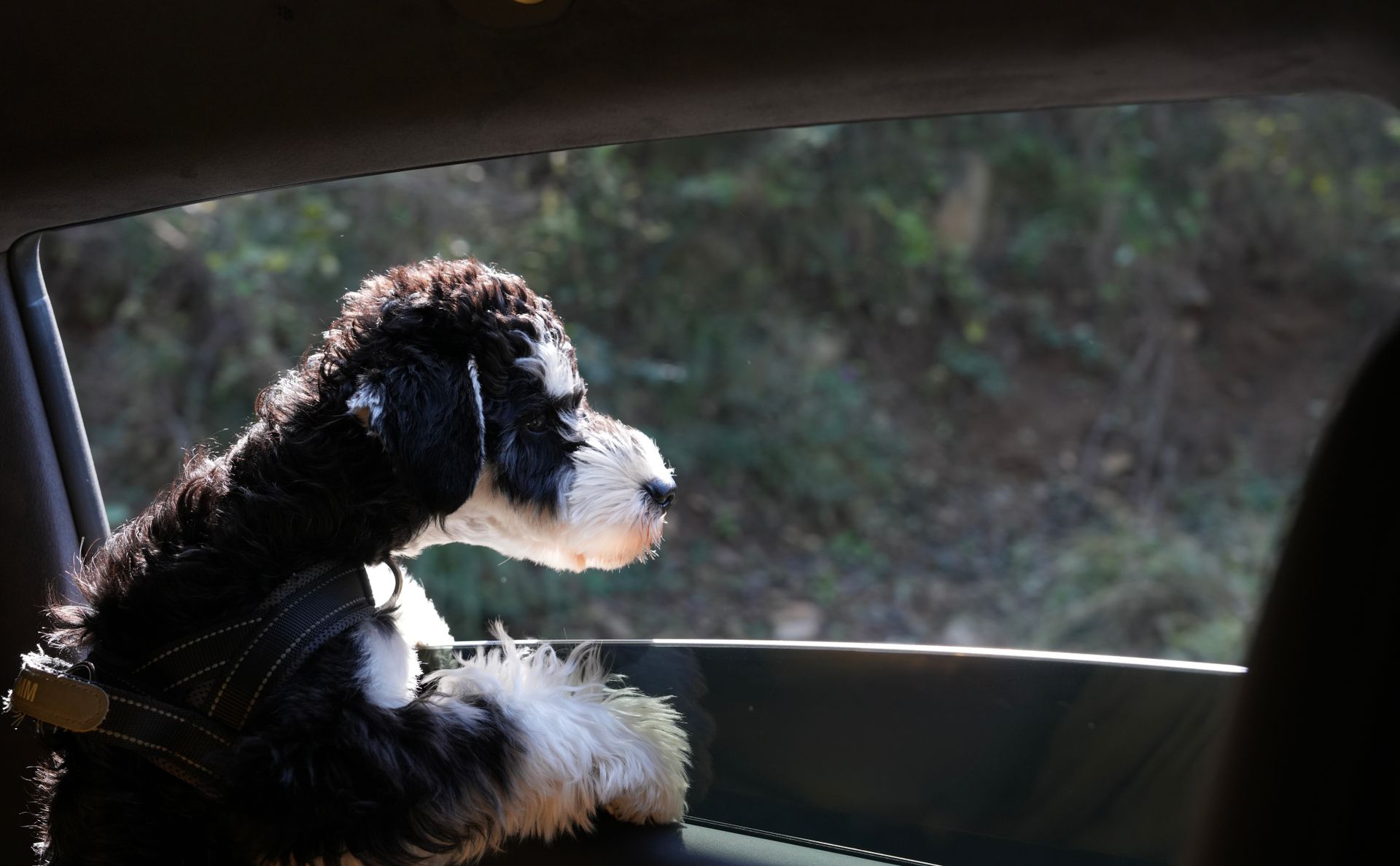
Bernedoodle Potty Training Guide: How to House-Train Your Puppy
Bringing home a Bernedoodle puppy is an exciting experience, but one of the first responsibilities for any new puppy owner is teaching the puppy where it should go to the bathroom.
Potty training takes patience, consistency, supervision, and a predictable routine. Puppies are still developing physically and mentally, so accidents are a normal part of the learning process.
The goal is not to punish accidents. Instead, owners should create as many opportunities as possible for the puppy to make the correct choice and then reward that behavior.
With a consistent approach, most Bernedoodle puppies can gradually develop reliable bathroom habits.
Start Potty Training on the First Day
There is no need to wait several days before beginning potty training.
As soon as your Bernedoodle puppy arrives home, establish a simple routine.
Show the puppy where you want it to go and take it there regularly.
The puppy does not need to understand everything immediately. The first few days are about creating repetition.
A simple pattern might be:
Wake up
Go outside
Eat
Go outside again
Play
Go outside
Nap
Go outside after waking
Repeating this routine helps the puppy begin connecting certain activities with bathroom breaks.
Puppies Need Frequent Bathroom Opportunities
Young puppies have smaller bladders and less control than adult dogs.
That means waiting too long between bathroom breaks can make accidents much more likely.
Take your Bernedoodle puppy outside after important events such as:
Waking up
Eating
Drinking a significant amount
Playing
Training
Napping
Exciting activity
Before bedtime
The exact schedule will depend on the individual puppy, age, routine, and veterinary guidance.
When in doubt, providing more opportunities is generally easier than expecting a young puppy to wait too long.
Watch for Potty Signals
Puppies often provide clues that they need to go.
A Bernedoodle may:
Sniff the floor
Walk in circles
Wander away from people
Suddenly stop playing
Become restless
Head toward a previous accident area
Whine or move toward the door
These signals can be subtle.
The more closely you supervise your puppy, the easier it becomes to recognize the individual signs.
Eventually, many owners learn their puppy’s personal bathroom routine and can anticipate when a trip outside is needed.
Take Your Puppy to the Same Bathroom Area
Using a consistent outdoor location can help establish a routine.
The smells from previous bathroom trips can also help communicate that the area is an appropriate place to eliminate.
Keep the first few minutes focused.
Take the puppy to the designated area and give it time to sniff and settle.
Once the puppy successfully goes, reward it immediately.
The reward should happen soon enough that the puppy can connect the reward with the behavior you want.
Use a Consistent Potty Cue
Some owners find it helpful to use a simple phrase whenever the puppy begins going to the bathroom.
You might use a short cue such as:
“Go potty.”
Say it calmly and consistently.
Over time, the puppy may begin associating the phrase with the behavior.
Avoid repeating the cue constantly while the puppy is still learning. The goal is to create a clear association rather than background noise.
Reward Success Immediately
Positive reinforcement is one of the most useful tools during potty training.
When your Bernedoodle puppy goes in the correct location, provide praise and an appropriate reward immediately afterward.
The timing matters.
If you wait several minutes before offering the reward, the puppy may not understand what earned it.
A simple routine can be:
Puppy goes outside.
Puppy eliminates.
Owner immediately praises.
Puppy receives an appropriate reward.
The puppy gets a little more time outside before returning indoors.
This helps make successful potty trips positive experiences.
Supervision Is One of the Biggest Keys
A puppy that is wandering freely around the entire house can easily have an accident before an owner notices.
During the early stages of potty training, supervision is extremely important.
Keep your puppy close enough that you can notice changes in behavior.
If you cannot actively supervise, use an appropriate puppy-safe area.
The more often a puppy has successful bathroom trips and fewer opportunities to practice indoor accidents, the easier the learning process can become.
Don’t Give Too Much Freedom Too Quickly
One of the most common potty-training mistakes is giving a puppy access to the entire house too soon.
A puppy may understand that the living room is not the place to go but still not understand that the hallway, bedroom, or basement follows the same rule.
Gradually expand access.
Start with areas where you can easily supervise your Bernedoodle.
As the puppy becomes more reliable, allow access to additional parts of the home.
Freedom should increase alongside reliability.
Crate Training and Potty Training
A properly introduced crate can be useful as part of a broader puppy routine, although a crate should never be used as punishment.
Many puppies naturally try to avoid soiling the area where they sleep, but owners should not rely on this alone.
The puppy still needs frequent opportunities to go outside.
The crate should be an appropriate size, comfortable, and used according to the puppy’s age and individual needs.
Young puppies should not be expected to remain confined for excessive periods without bathroom opportunities.
What to Do When an Accident Happens
Accidents are part of raising a puppy.
If you catch your Bernedoodle beginning to have an accident indoors, calmly interrupt and take the puppy outside.
Avoid yelling or frightening the puppy.
If the puppy finishes outside, reward the correct behavior.
The goal is to communicate where the puppy should go rather than making the puppy afraid of eliminating in front of you.
Fear can actually make potty training more complicated.
Don’t Punish Old Accidents
If you discover an accident after it has already happened, there is little benefit in punishing the puppy.
The puppy is unlikely to understand why it is being corrected several minutes later.
Instead, clean the area thoroughly and think about what happened before the accident.
Was the puppy left unsupervised?
Had it recently eaten?
Did it wake from a nap?
Was it playing?
Was the last bathroom break too long ago?
Finding the reason can help prevent another accident.
Clean Accidents Thoroughly
Dogs have powerful noses.
If an accident leaves behind an odor that your puppy can detect, the area may become attractive for future accidents.
Use an appropriate pet-safe enzymatic cleaner designed for removing urine and other organic odors.
Avoid simply masking the smell.
Thorough cleaning can reduce the chance that the puppy repeatedly chooses the same indoor location.
Establish a Morning Routine
Morning is one of the most important times for potty training.
Take your Bernedoodle puppy outside promptly after waking.
Avoid starting the morning with a long play session throughout the house.
The puppy may become distracted and have an accident before reaching the appropriate bathroom area.
Once the puppy successfully goes outside, you can begin the rest of the morning routine.
Potty Training After Meals
Eating can stimulate the digestive system, making bathroom trips after meals especially important.
Rather than feeding your puppy and immediately giving it unrestricted access to the house, plan a bathroom opportunity afterward.
The exact timing will vary from puppy to puppy.
Pay attention to your individual Bernedoodle and learn its normal pattern.
Keeping a simple record during the first few weeks can help identify predictable bathroom times.
Potty Training After Play
Play can make puppies forget about almost everything else.
A puppy may appear completely focused on chasing a toy one minute and suddenly need to go the next.
This is why bathroom trips after active play can be helpful.
As the puppy becomes older and more reliable, the frequency of these trips can gradually decrease.
Potty Training at Night
Nighttime can be challenging for new puppy owners.
A young Bernedoodle may not be physically capable of making it through an entire night without a bathroom break.
Keep nighttime trips calm and boring.
Take the puppy outside, allow it to eliminate, praise quietly, and return to the sleeping area.
Avoid turning a middle-of-the-night bathroom trip into a long play session.
The puppy should gradually learn that nighttime is for sleeping.
Potty Training During Rain or Bad Weather
Weather can complicate house training.
Some puppies may hesitate to go outside when it is raining, snowing, windy, or otherwise uncomfortable.
Rather than immediately giving up and returning indoors, create a consistent sheltered bathroom area when possible.
Keep the trip focused and reward the puppy when it succeeds.
This is particularly useful in areas where weather changes can make outdoor potty breaks less convenient.
Keep Outdoor Potty Trips Focused
During early potty training, the backyard should not always become a giant playground.
If the puppy immediately begins chasing leaves, digging, running around, or looking for distractions, it may forget why it went outside.
Give the puppy a chance to eliminate first.
Once it successfully goes, reward it and then allow some playtime when appropriate.
This teaches the puppy that bathroom trips and playtime can both be enjoyable without confusing the purpose of going outside.
Keep a Potty Training Journal
A simple record can make potty training much easier.
Write down:
Meal times
Water intake patterns
Bathroom trips
Successful outdoor trips
Accidents
Nap times
Play sessions
After several days, patterns may become obvious.
You might discover that your puppy usually needs to go shortly after eating or consistently wakes from naps needing a bathroom break.
This information can help you create a more effective routine.
Every Family Member Should Follow the Same Routine
Consistency becomes much harder when every person in the household uses different rules.
Everyone should understand:
Where the puppy should go
Which door to use
What cue to use
How to respond to accidents
How to reward successful trips
When the puppy needs supervision
Children should also be taught how to interact appropriately with the puppy during potty training.
Clear household communication makes training easier.
Potty Training While Traveling
Once your Bernedoodle understands the basic routine at home, you can gradually maintain those habits in new places.
Travel can temporarily make potty training more difficult because everything smells and feels different.
When visiting somewhere new, take your puppy outside frequently and establish a consistent bathroom location if possible.
Do not assume that a puppy who is reliable at home will immediately understand every unfamiliar environment.
Travel is another opportunity to reinforce the same basic routine.
Potty Training and Accidents During Excitement
Some puppies have accidents when they become extremely excited.
Visitors, greetings, play, or other stimulating situations can occasionally cause a puppy to lose control.
This does not necessarily mean the puppy has forgotten its training.
Before exciting events, provide a bathroom opportunity.
During greetings, keep interactions calm and controlled.
As the puppy matures, these situations often become easier to manage.
What If Your Puppy Suddenly Starts Having Accidents?
A puppy that was previously doing well but suddenly begins having frequent accidents deserves closer attention.
Think about whether something in the routine changed.
Possibilities can include:
A new schedule
More freedom around the house
Less frequent bathroom breaks
A change in household activity
Travel
Stress
Changes in water intake
Other physical or behavioral changes
If accidents suddenly increase or are accompanied by other concerning signs, contact your veterinarian.
Changes in bathroom habits can sometimes have medical causes, so it is important not to assume every accident is simply a training problem.
Don’t Expect Overnight Perfection
Potty training is a developmental process.
There may be several successful days followed by an accident.
That does not necessarily mean training has failed.
Continue the routine.
Increase supervision when necessary.
Reward successful bathroom trips.
Reduce freedom temporarily if accidents increase.
Progress is rarely perfectly linear.
The important thing is that the overall trend moves toward greater reliability.
When Can a Bernedoodle Be Trusted Around the House?
There is no single age when every Bernedoodle is ready for unrestricted freedom.
Instead, look at behavior.
A puppy that consistently uses the correct bathroom area, communicates its needs, and goes long periods without accidents may be ready for gradually increased freedom.
Give access to one additional area at a time.
If accidents return, reduce the amount of freedom and increase supervision again.
This approach allows the puppy to earn additional independence rather than receiving the entire house at once.
Building a Reliable Potty Routine
Successful house training comes down to several basic principles:
Take your puppy out frequently.
Supervise closely.
Reward successful outdoor bathroom trips immediately.
Clean accidents thoroughly.
Avoid punishment.
Maintain a predictable schedule.
Increase freedom gradually.
Pay attention to your puppy’s individual signals.
These habits create a clear learning environment.
Final Thoughts on Bernedoodle Potty Training
Potty training is one of the first major lessons a Bernedoodle puppy learns after joining a new family.
It requires patience, but the process becomes much easier when owners focus on prevention and positive reinforcement rather than punishment.
Take your puppy outside regularly, especially after sleeping, eating, drinking, playing, and other predictable activities. Supervise closely when the puppy is indoors, reward successful bathroom trips immediately, and clean accidents thoroughly when they happen.
Most importantly, remember that your Bernedoodle is still learning.
A puppy does not automatically understand the rules of a new home. Through repetition and consistency, however, the puppy can gradually develop reliable habits that become part of everyday life.
With time, patience, and a predictable routine, potty training can become one of the many skills that helps your Bernedoodle grow into a well-mannered family companion.
Read Next: Bernedoodle Travel Guide: How to Prepare Your Dog for Road Trips and Adventures