
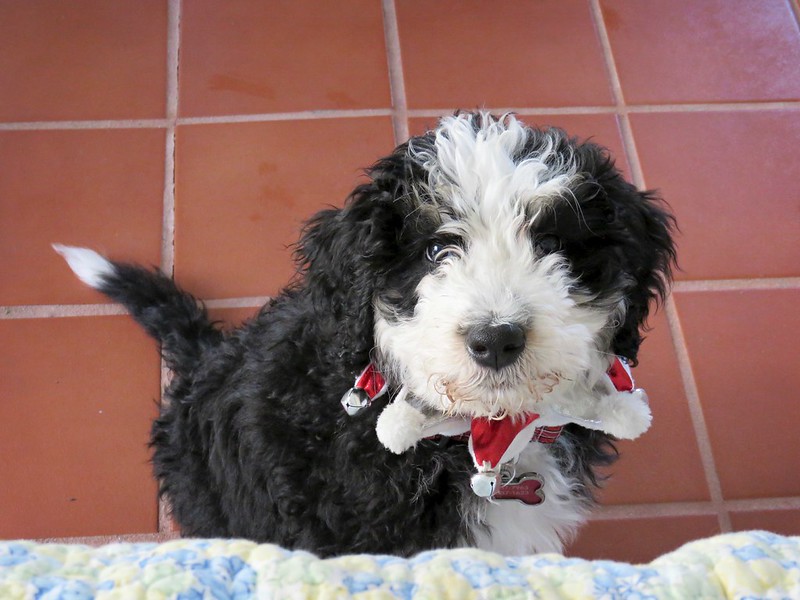
Bernedoodle Feeding Guide: How to Build a Healthy Mealtime Routine
Feeding a Bernedoodle is about more than simply filling a food bowl every morning and evening. Puppies are growing rapidly, adult dogs have different nutritional requirements, and individual Bernedoodles can vary considerably in size, activity level, metabolism, and appetite.
A thoughtful feeding routine can help owners monitor their dog’s body condition, establish predictable mealtimes, and recognize changes in appetite that may deserve attention.
Bernedoodles are a cross between Bernese Mountain Dogs and Poodles, and their adult size can vary depending on genetics and breeding. Because of that variation, feeding recommendations should be based on the individual dog’s age, size, activity, growth, and veterinary guidance rather than a one-size-fits-all formula.
Why Bernedoodle Nutrition Matters
Nutrition provides the foundation for a dog’s growth, energy, muscle development, immune function, and overall well-being.
A growing Bernedoodle puppy has especially important nutritional needs because its body is developing rapidly.
Adult Bernedoodles still require balanced nutrition, but their calorie requirements may be different once growth slows.
Senior dogs can eventually require additional dietary consideration as their activity levels and nutritional needs change.
This is why a feeding plan should evolve with the dog.
What works for a young puppy may not remain appropriate throughout adulthood.
Start With a Complete and Balanced Diet
The foundation of a Bernedoodle’s diet should be a complete and balanced dog food appropriate for its life stage.
Puppy food should be formulated for growing dogs.
Adult food should be appropriate for adult maintenance.
Dogs with particular health requirements may need a veterinarian-recommended diet.
Rather than choosing food solely because of marketing claims, owners should consider whether the food is appropriate for the dog’s age, size, and nutritional needs.
Your veterinarian can help you determine what type of diet is appropriate for your individual Bernedoodle.
Feeding a Bernedoodle Puppy
Puppies generally need more frequent meals than adult dogs.
Instead of feeding a young puppy one large meal, owners commonly divide the daily amount into multiple meals.
This can make it easier for a puppy to receive consistent nutrition throughout the day while also fitting naturally into a house-training routine.
The exact feeding schedule should depend on the puppy’s age and the recommendations provided by the breeder and veterinarian.
As the puppy matures, the number of meals can eventually be adjusted.
Follow the Breeder’s Initial Feeding Routine
When a Bernedoodle puppy first arrives at its new home, keeping its food and routine consistent can make the transition easier.
Ask the breeder what the puppy has been eating.
Find out:
The brand and type of food
How much the puppy receives
How often meals are provided
Typical mealtimes
Treats being used
Any known dietary sensitivities
How food transitions should be handled
Avoid making several major changes at the same time a puppy is adjusting to a new household.
Keeping the initial routine familiar can make the transition smoother.
How Much Should a Bernedoodle Eat?
There is no universal amount that every Bernedoodle should eat.
Food labels provide starting recommendations, but they do not know your dog’s individual metabolism or activity level.
Two Bernedoodles of the same age and weight may require different calorie amounts.
Owners should monitor body condition and growth rather than automatically increasing portions whenever the dog appears hungry.
Your veterinarian can help determine whether your Bernedoodle is maintaining an appropriate weight.
Monitor Body Condition Instead of Focusing Only on the Scale
Weight is useful information, but it does not tell the entire story.
A Bernedoodle’s body condition matters too.
Owners should become familiar with how their dog’s ribs, waist, and abdomen should look and feel at a healthy weight.
If you are unsure whether your Bernedoodle is too thin, too heavy, or appropriately conditioned, ask your veterinarian to demonstrate what to look for.
Regular monitoring can help catch gradual weight changes before they become a larger problem.
Growing Bernedoodles Need Controlled Nutrition
It can be tempting to encourage a puppy to grow as quickly as possible.
However, faster growth is not automatically healthier growth.
Large or rapidly growing puppies benefit from carefully balanced nutrition.
Owners should avoid randomly adding supplements, vitamins, calcium, or other ingredients unless specifically recommended by a veterinarian.
More nutrients are not necessarily better.
The goal is controlled, healthy development.
Don’t Overfeed a Bernedoodle Puppy
Puppies can be enthusiastic about food.
Some may act as though they are still hungry after finishing their meal.
That does not necessarily mean they need a larger portion.
Overfeeding can contribute to excessive weight gain, which is particularly undesirable during the growing stage.
Instead of responding to every request for food with additional meals, follow an appropriate feeding plan and monitor growth and body condition.
Keep Treats Under Control
Training treats can be extremely useful when teaching a Bernedoodle.
However, treats contain calories too.
If your dog receives numerous treats throughout the day, those calories should be considered as part of the overall diet.
Choose appropriately sized rewards.
For many training exercises, the treat does not need to be large.
A tiny reward can be enough to reinforce the desired behavior.
This allows owners to conduct frequent training without unnecessarily adding large amounts of food.
Use Part of the Daily Food for Training
One useful approach is to use a portion of the dog’s regular food as training rewards.
This can work particularly well for puppies that are highly motivated by food.
Instead of adding several additional servings of treats, reserve some of the dog’s normal daily food allowance for training.
This turns mealtime into an opportunity for mental stimulation while helping owners keep track of overall intake.
Establish Consistent Mealtimes
A predictable feeding schedule can make life easier for both the Bernedoodle and the owner.
Consistent meals can also make it easier to anticipate bathroom needs, which can be especially helpful during puppy house training.
A routine might include breakfast in the morning and another meal later in the day, depending on the dog’s age and feeding plan.
The exact schedule should be tailored to the individual dog.
Free Feeding Versus Scheduled Meals
Some owners leave food available throughout the day.
Others provide meals at specific times.
Scheduled feeding can make it easier to monitor exactly how much a dog eats and to recognize changes in appetite.
It can also make potty routines more predictable for puppies.
Free feeding may work for some individual dogs, but it can make calorie management more difficult when a dog tends to overeat.
Discuss the best approach for your Bernedoodle with your veterinarian.
Always Provide Fresh Water
Fresh, clean water should be available to your Bernedoodle throughout the day unless your veterinarian has provided specific instructions otherwise.
Water requirements can increase with warm weather, exercise, and certain dietary factors.
Keep the water bowl clean and refill it regularly.
If your dog suddenly begins drinking significantly more or less than usual, pay attention to the change and discuss it with your veterinarian if it persists or is accompanied by other symptoms.
Don’t Suddenly Change Your Bernedoodle’s Food
A sudden change in diet can cause digestive upset.
If you need to switch foods, a gradual transition is generally easier for many dogs.
Mix increasing amounts of the new food with decreasing amounts of the old food over several days, following the guidance of your veterinarian or the food manufacturer.
If your Bernedoodle develops persistent vomiting, diarrhea, refuses food, or shows other concerning symptoms during a diet transition, contact your veterinarian.
Be Careful With Human Food
It can be difficult to resist sharing food with a Bernedoodle that gives you an excellent begging face.
Occasional dog-safe foods may be appropriate in moderation, but owners should avoid making table scraps a major part of the dog’s diet.
Some human foods can be dangerous for dogs.
Foods containing ingredients such as chocolate, grapes, raisins, onions, garlic, or certain artificial sweeteners can be hazardous.
When in doubt, do not give the food to your dog until you have confirmed that it is safe.
Don’t Let Begging Become a Habit
Bernedoodles are often highly social dogs, and some quickly discover that sitting beside the dinner table can lead to rewards.
If begging is not a behavior you want, avoid rewarding it.
Instead, teach your dog an alternative behavior.
For example, your Bernedoodle can learn to settle on a mat while the family eats.
Reward the dog for remaining calm in its designated location.
This turns mealtime into another opportunity for training.
Slow Down Fast Eaters
Some Bernedoodles may eat meals extremely quickly.
Fast eating can make mealtimes messy and may contribute to discomfort in some dogs.
If your Bernedoodle regularly inhales its food, talk with your veterinarian about appropriate strategies.
Depending on the individual dog, owners may use specially designed slow-feeding bowls, food puzzles, or other feeding methods.
Make sure any feeding device is appropriate for the dog’s size and safe to use.
Food Puzzles Can Add Mental Stimulation
A meal does not always have to come from a traditional bowl.
Food puzzles and enrichment feeders can turn eating into a problem-solving activity.
For an intelligent Bernedoodle, this can provide mental stimulation while delivering part of the dog’s regular food.
Introduce new feeding puzzles gradually.
Make the first versions easy enough that your dog succeeds.
As your Bernedoodle learns how the puzzle works, you can gradually increase the challenge.
Feeding After Exercise
Meal timing can depend on the individual dog and its activity level.
Owners should avoid turning intense exercise immediately before or after meals into a routine.
For dogs that participate in strenuous activity, discuss appropriate feeding and exercise timing with a veterinarian.
This is particularly important for larger dogs, where owners should take appropriate precautions regarding digestive emergencies such as gastric dilatation-volvulus.
If your dog shows signs of a medical emergency, seek immediate veterinary care.
Bernedoodle Feeding During Travel
Travel can disrupt a dog’s normal routine.
When traveling with your Bernedoodle, bring enough of its usual food rather than assuming the same product will be available at your destination.
Keep food stored securely.
Maintain normal mealtimes when practical.
Bring a familiar bowl if possible.
Avoid introducing new foods during travel unless necessary.
Keeping the diet consistent can reduce unnecessary digestive problems while your dog is already dealing with a change in environment.
Feeding a Bernedoodle During Different Seasons
A dog’s calorie requirements can change with activity.
During periods of high activity, a Bernedoodle may burn more calories.
During a quieter winter period, an indoor dog may need fewer calories.
The amount of food should therefore be reviewed as your dog’s lifestyle changes.
Do not automatically increase food because the weather is colder or decrease it because the dog is spending more time outdoors.
Monitor body condition and activity level instead.
Senior Bernedoodle Feeding Needs
As Bernedoodles age, their activity levels may change.
An older dog may become less active and therefore require fewer calories.
Some senior dogs also develop health conditions that influence their nutritional requirements.
There is no universal senior diet that is perfect for every dog.
Instead, discuss your aging Bernedoodle’s weight, activity, and health with your veterinarian.
A senior dog may benefit from dietary adjustments based on its individual circumstances.
Keep Feeding Supplies Clean
Food and water bowls should be cleaned regularly.
Food residue can accumulate on bowls, and water containers can develop buildup over time.
Wash bowls thoroughly and provide fresh water.
If you use food puzzles or enrichment feeders, clean them according to their material and design.
Good feeding habits include keeping the equipment used for meals clean as well as providing appropriate food.
Store Dog Food Properly
Store food according to the manufacturer’s instructions.
Keep it in a cool, dry location and protect it from moisture.
Make sure the storage container is clean and appropriately sealed.
Do not simply pour new food into a container containing old food without cleaning it periodically.
Check expiration information and monitor the food for unusual odors, moisture, insects, or other signs that it may no longer be suitable.
Watch for Changes in Appetite
A Bernedoodle’s appetite can provide useful information.
If a dog that normally eats enthusiastically suddenly refuses multiple meals, that change deserves attention.
Likewise, a dramatic increase in appetite can be worth discussing with a veterinarian, especially if accompanied by weight changes, increased thirst, digestive problems, or other symptoms.
Do not automatically assume a change in appetite is simply picky eating.
Don’t Diagnose Food Allergies Yourself
Owners sometimes assume that itching, digestive problems, or other symptoms automatically mean their Bernedoodle has a food allergy.
There can be many possible causes for these symptoms.
If you suspect your dog has a dietary problem, talk with a veterinarian.
A proper evaluation can help determine whether food is actually responsible and what dietary approach is appropriate.
Avoid eliminating large numbers of ingredients without professional guidance.
Make Mealtime Calm
Some Bernedoodles become overly excited around food.
Teaching calm behavior before meals can help create better household manners.
Ask your dog for a simple behavior it already knows, such as sitting.
Place the bowl down when the dog is calm.
Reward appropriate behavior by providing the meal.
The goal is not to make the dog wait for an excessively long time.
It is simply to teach that food arrives through calm, predictable behavior rather than frantic jumping or barking.
Keep Children Out of the Food Bowl
Children should be taught not to disturb a dog while it is eating.
Even a normally friendly Bernedoodle may become uncomfortable if someone repeatedly reaches toward its food.
Give the dog a quiet place to eat.
Teach children to leave the dog alone during meals.
This simple rule can help create a safer relationship between children and dogs.
Feeding Multiple Dogs
If your household contains more than one dog, monitor mealtimes carefully.
Some dogs eat slowly while others rush to finish their own food and then investigate another dog’s bowl.
Separate feeding areas can help prevent competition.
It also makes it easier to determine how much each dog actually ate.
This becomes especially important if one dog requires a specialized diet.
Your Bernedoodle’s Diet May Change Over Time
A feeding plan should not be considered permanent.
Your Bernedoodle may move from puppy food to adult food.
Activity levels may change.
Weight may change.
Health needs may change.
Life circumstances may change.
Regular veterinary visits provide a good opportunity to review your dog’s diet and determine whether adjustments are appropriate.
Final Thoughts on Feeding a Bernedoodle
Feeding a Bernedoodle properly starts with understanding that every dog is an individual.
Age, size, genetics, activity, growth, body condition, and health all influence nutritional needs.
Puppies require particular attention because they are developing rapidly, while adult and senior Bernedoodles may need adjustments as their lifestyles change.
Provide a complete and balanced diet appropriate for your dog’s life stage, maintain a consistent feeding routine, keep fresh water available, monitor treats, and avoid making unnecessary dietary changes.
Most importantly, use your veterinarian as a partner in determining what is appropriate for your Bernedoodle.
A good feeding routine is not about finding the biggest bowl of food or following a generic chart. It is about providing the right nutrition for the individual dog and adjusting that plan as the Bernedoodle grows, matures, and enters different stages of life.
Read Next: Bernedoodle Grooming Guide: Brushing, Bathing, Coat Care, and Healthy Grooming Habits