
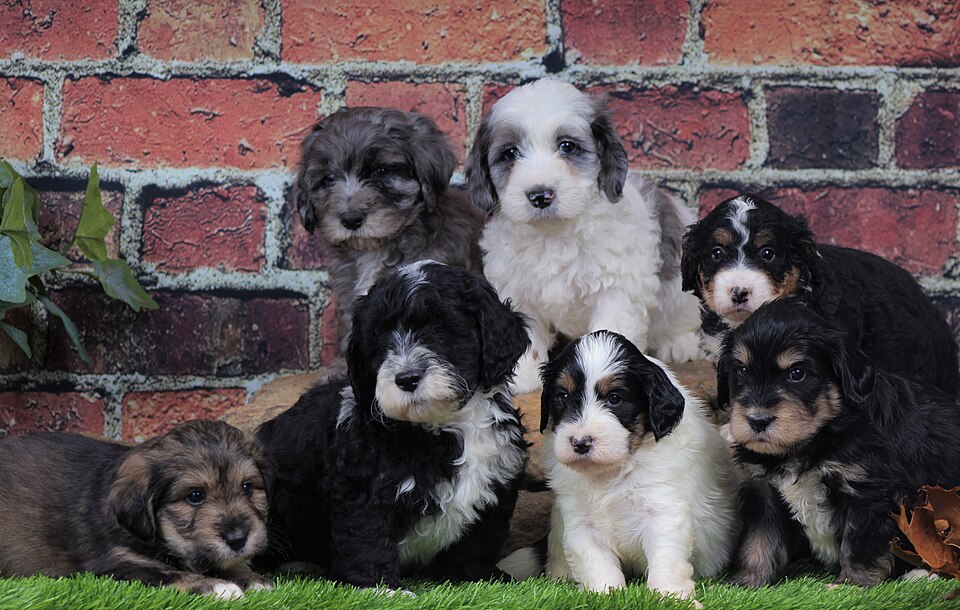
Bernedoodle Leash Training: How to Teach Your Dog to Walk Calmly
Leash training is an important part of raising a well-mannered Bernedoodle. A dog that knows how to walk politely on a leash is easier to take on neighborhood walks, outdoor adventures, veterinary visits, and family outings.
Bernedoodles can be strong, energetic, curious, and highly interested in their surroundings. Teaching good leash manners early can make walks much more enjoyable for both the dog and the person holding the leash.
The goal of leash training is not to make a Bernedoodle walk stiffly beside you every second. Instead, the goal is to teach the dog how to move safely with its handler, respond to direction, and avoid constantly pulling toward everything it finds interesting.
Why Leash Training Matters for Bernedoodles
A Bernedoodle may eventually become a fairly substantial dog, depending on its genetics and breeding.
A small puppy pulling on a leash may not seem like a serious problem.
A much larger adolescent or adult dog pulling with the same enthusiasm can be a completely different situation.
Teaching leash manners while a Bernedoodle is young gives owners an opportunity to establish good habits before the dog becomes stronger.
Leash training also provides mental stimulation.
The dog learns to pay attention to its handler while navigating a constantly changing environment.
Start Leash Training Inside the House
You do not need to begin leash training on a busy sidewalk.
In fact, starting inside the home can make the process much easier.
Put the collar or harness on your Bernedoodle.
Allow the puppy to become comfortable wearing it.
Attach the leash.
Let the puppy walk around while supervised.
Reward calm behavior.
Walk a few steps.
Reward the puppy for following you.
There may be very little actual walking during the first few sessions.
That is completely fine.
The objective is to make the equipment and concept of walking together feel normal.
Let Your Bernedoodle Get Used to the Leash
Many puppies initially find a leash strange.
They may bite it.
Paw at it.
Stand still.
Try to run away.
Or simply stare at it as though something very unusual has appeared.
Do not turn this into a battle.
Give the puppy time to investigate the leash safely while supervised.
Reward calm interactions.
Keep the leash experience positive.
Over time, the puppy should learn that the leash predicts walks, exploration, and time with its owner.
Choose Appropriate Walking Equipment
The right equipment can make training easier.
Some owners prefer a flat collar.
Others use a properly fitted harness.
The best choice depends on the individual Bernedoodle, its age, behavior, and physical needs.
Whatever equipment you choose should fit appropriately and allow normal movement without causing discomfort.
A professional trainer or veterinarian can help you determine what equipment is appropriate if you are uncertain.
Avoid choosing equipment simply because it is popular online.
The dog’s safety and comfort should come first.
Teach Your Bernedoodle to Follow You
Before expecting a perfect heel, teach your puppy that following you is rewarding.
Walk a few steps around the house.
When your puppy follows, provide praise or an appropriate treat.
Change direction.
Encourage the puppy to follow again.
This creates a simple game.
The puppy begins learning that paying attention to its owner is worthwhile.
Eventually, the same concept can be transferred to outdoor walks.
Reward Attention
One of the most valuable leash-training skills is attention.
Your Bernedoodle will encounter countless distractions outside.
People may walk past.
Cars may drive by.
Other dogs may appear.
Birds may move through the grass.
There may be unfamiliar smells everywhere.
If your dog learns to check in with you, managing these distractions becomes easier.
Reward your Bernedoodle whenever it voluntarily looks back at you during a walk.
You do not need to constantly call its name.
Sometimes simply rewarding the behavior when it naturally happens is enough.
Don’t Reward Pulling
Dogs learn from consequences.
If your Bernedoodle pulls toward a tree and eventually reaches the tree, the dog may learn that pulling works.
If it pulls toward another dog and gets to greet that dog, pulling may become even more rewarding.
Instead, teach your Bernedoodle that walking calmly is what allows the walk to continue.
When the leash becomes tight, stop or change direction as appropriate.
When the dog returns attention to you and the leash becomes loose, continue moving.
Consistency matters.
Loose-Leash Walking Is the Goal
Loose-leash walking means the leash remains relatively relaxed rather than constantly stretched tight.
Your Bernedoodle does not necessarily need to walk directly beside your leg.
There can be some freedom to sniff and explore as long as the dog remains manageable and safe.
A relaxed leash creates a much more enjoyable walking experience.
It also gives the owner better control if something unexpected happens.
Use Sniffing as a Reward
Sniffing is an important part of how dogs experience the world.
Instead of treating every sniff as a distraction, owners can use sniffing as part of the walk.
For example, ask your Bernedoodle to walk calmly for a short distance.
Then allow the dog to stop and investigate an appropriate area.
This teaches the dog that walking politely does not mean it will be denied opportunities to explore.
In many cases, allowing appropriate sniffing can make walks more mentally satisfying.
Practice Direction Changes
Direction changes can be an excellent training exercise.
Walk forward.
Then calmly turn around.
Encourage your Bernedoodle to follow.
Reward the dog when it catches up.
Practice again.
The exercise teaches the dog to pay attention to where you are going rather than assuming that it can always move wherever it wants.
Keep the exercise light and positive.
Keep Training Sessions Short
Puppies have limited attention spans.
Even adult dogs can become mentally tired during training.
Instead of attempting a long, formal leash-training session, incorporate training into normal walks.
Practice for a few minutes.
Allow exploration.
Practice again.
Then return home.
This creates variety and prevents the walk from becoming frustrating.
Start in a Quiet Area
A busy downtown sidewalk is not necessarily the best location for a puppy’s first outdoor leash-training experience.
Start somewhere relatively quiet.
A yard, driveway, calm neighborhood area, or other appropriate low-distraction location can give your Bernedoodle an easier environment in which to learn.
As the dog becomes more reliable, gradually introduce more distractions.
Gradually Increase Distractions
Once your Bernedoodle can walk calmly in a quiet environment, make the challenge slightly harder.
Introduce:
More people
Different sidewalks
New smells
Mild traffic
New outdoor surfaces
More distant dogs
Different walking routes
Do not introduce everything simultaneously.
If your dog struggles, reduce the difficulty.
Training should be progressive.
Teach Your Dog How to Pass People
A Bernedoodle may become excited when meeting people.
While friendliness is wonderful, jumping on strangers can quickly become a problem.
Teach your dog that calm walking and polite greetings are expected.
If someone wants to greet your Bernedoodle, ask the person to wait until the dog is calm.
Reward four paws on the ground.
Over time, the dog learns that calm behavior produces attention.
Passing Other Dogs
Seeing another dog can be one of the biggest distractions during a walk.
Some Bernedoodles may want to greet every dog they see.
Others may become overly excited.
Do not allow your dog to drag you toward another dog.
Instead, create distance when necessary.
Reward your Bernedoodle for remaining calm and paying attention to you.
If the other dog is friendly and a greeting is appropriate, allow the interaction only when both dogs and handlers are comfortable.
Not every dog needs to say hello.
Don’t Force Dog-to-Dog Greetings
A common misconception is that every dog should greet every other dog.
That is not necessary.
Your Bernedoodle can have a successful walk without interacting with every dog it encounters.
Teaching your dog to calmly pass other dogs is actually a valuable skill.
It gives your Bernedoodle more options and reduces unnecessary excitement.
Managing a Bernedoodle That Pulls
If your Bernedoodle already pulls heavily, start by identifying why.
Is the dog trying to reach another dog?
Does it want to smell something?
Is it excited about going somewhere?
Is the dog simply moving faster than the owner?
Understanding the motivation can help you choose the appropriate training strategy.
Avoid responding by repeatedly jerking the leash.
Instead, focus on teaching an alternative behavior.
Use High-Value Rewards When Necessary
Some environments are more distracting than others.
A dry piece of kibble might be enough inside the house.
Outside, your Bernedoodle may need something more motivating.
Small, high-value training rewards can help reinforce attention when distractions are strong.
The reward does not need to be large.
Small pieces can be enough.
Remember to account for training treats as part of the dog’s overall food intake.
Teach an Emergency U-Turn
An emergency U-turn can be a useful safety skill.
Teach your Bernedoodle that when you say a particular cue, the dog should quickly turn and follow you in the opposite direction.
Practice in a low-distraction environment first.
Use a happy voice.
Reward the dog for following.
Gradually practice around mild distractions.
This skill can become extremely useful when you encounter an unexpected situation during a walk.
Practice Stopping
Your Bernedoodle should also learn that when you stop, the dog should stop moving forward.
This can be taught gradually.
Walk forward.
Stop.
Reward the dog when it stops or returns attention to you.
Then continue walking.
This can help with crossing streets, waiting at doors, and navigating crowded environments.
Teach Calmness Before Leaving the House
Some Bernedoodles become extremely excited when they realize a walk is coming.
The leash appears.
The door opens.
The dog starts jumping.
Instead of immediately leaving during peak excitement, wait for a moment of calm behavior.
Ask for a simple behavior such as sitting.
Once the dog is calm, begin preparing to leave.
This teaches your Bernedoodle that excitement does not control the routine.
Don’t Let the Door Become a Launch Point
Door manners are closely connected to leash safety.
Your Bernedoodle should not rush through an open door.
Practice waiting.
Open the door slightly.
If the dog rushes forward, close it.
When the dog waits calmly, continue.
Over time, the puppy learns that calm behavior allows access to the outside.
This can be especially important in homes near streets or driveways.
Walking in Different Weather
Bernedoodles may experience different weather conditions throughout the year.
Montana owners may encounter snow and ice during winter, while summer can bring warmer temperatures.
Do not assume that your dog can comfortably handle every weather condition simply because it has a thick coat.
Check the ground temperature during hot weather.
Pay attention to ice and snow during winter.
Shorten walks when necessary.
Provide appropriate protection when recommended.
Your dog’s comfort should determine the length and intensity of the walk.
Walking on Different Surfaces
Puppies can benefit from gradually experiencing different walking surfaces.
Depending on what is safe and appropriate, your Bernedoodle may encounter:
Grass
Concrete
Gravel
Dirt
Wood
Trails
Snow
Introduce new surfaces gradually.
Reward calm exploration.
This can help create a dog that is more comfortable navigating different environments.
Make Walks Mentally Interesting
A walk does not have to be about distance.
For dogs, exploring smells and environments can provide substantial mental stimulation.
Allow appropriate sniffing.
Change routes occasionally.
Practice simple commands.
Pause in safe locations.
Let your Bernedoodle investigate appropriate objects.
A shorter walk filled with exploration and training can sometimes be more enriching than simply walking a long distance without interaction.
Don’t Rush Puppy Walks
Young puppies do not need to complete marathon walks.
Their bodies are still developing.
Focus on age-appropriate activity and follow your veterinarian’s recommendations regarding exercise.
A puppy can learn plenty from a short walk.
The purpose of early walks is not to exhaust the dog.
It is to build confidence, teach manners, and create positive experiences outdoors.
Leash Training an Adolescent Bernedoodle
Adolescence can bring a new wave of distractions.
A Bernedoodle that previously walked well may suddenly become more interested in everything around it.
Do not assume the dog has forgotten all of its training.
Continue practicing.
Return to easier environments if necessary.
Reward good behavior.
Increase difficulty gradually again.
Consistency during adolescence can prevent temporary challenges from becoming permanent habits.
Leash Training an Adult Bernedoodle
Adult Bernedoodles can continue learning leash manners.
If your adult dog pulls, you can still retrain the behavior.
Start in a low-distraction environment.
Reward attention.
Practice loose-leash walking.
Gradually increase distractions.
Do not become discouraged simply because your dog is no longer a puppy.
Dogs can learn throughout their lives.
Common Leash Training Mistakes
One common mistake is expecting too much too soon.
Another is allowing the dog to practice pulling for months before beginning training.
Inconsistent rules can also create confusion.
For example, if pulling is allowed sometimes but not others, the dog may continue trying because pulling occasionally produces a reward.
Other mistakes include using excessive force, overwhelming a puppy with distractions, and turning every walk into a correction session.
Training should be educational, not exhausting.
Make Walking a Positive Experience
Your Bernedoodle should look forward to spending time with you.
Use encouragement.
Reward appropriate behavior.
Give the dog opportunities to explore.
Keep training sessions manageable.
Be patient when the puppy becomes distracted.
The relationship between owner and dog is an important part of successful leash training.
When Professional Training Can Help
Some leash problems can become difficult to manage without assistance.
If your Bernedoodle is extremely reactive, difficult to control, fearful, or displaying aggressive behavior on walks, seek help from a qualified professional trainer or veterinary behavior professional.
Professional guidance can help identify the underlying cause and create an appropriate training plan.
There is no reason to wait until a problem becomes severe.
Final Thoughts on Bernedoodle Leash Training
Leash training is one of the most practical skills you can teach a Bernedoodle.
The process begins with simple steps: becoming comfortable with the leash, learning to follow, rewarding attention, and gradually introducing distractions.
As your Bernedoodle becomes more reliable, you can expand the environments in which you practice.
Remember that a successful walk is not necessarily the longest walk.
A successful walk is one where your dog remains safe, manageable, engaged, and comfortable while learning how to navigate the world with you.
Start early, remain consistent, reward the behavior you want, and give your Bernedoodle plenty of opportunities to practice.
With time, those short puppy training sessions can develop into the calm walking habits that make everyday adventures much more enjoyable.
Read Next: The History of the Bernedoodle: How This Unique Breed Came to Be