Bernedoodle Growth and Size Guide: What to Expect as Your Puppy Matures
Watching a Bernedoodle puppy grow from a small, curious puppy into a full-grown family companion is one of the most rewarding parts of dog ownership. During the first year, your puppy can change dramatically in size, shape, behavior, and physical development.
Many new Bernedoodle owners naturally wonder how large their puppy will become and how quickly that growth will happen. While there are general patterns to puppy development, there is no single growth chart that accurately predicts the adult size of every Bernedoodle.
Genetics, the size of the parents, generation, nutrition, overall health, and individual development can all influence a dog’s eventual size.
Understanding the general stages of Bernedoodle growth can help owners know what to expect without becoming overly focused on a specific number on the scale.
Why Bernedoodle Size Can Vary
Bernedoodles are a cross between a Bernese Mountain Dog and a Poodle, and both parent breeds can have substantial variation in size.
The Poodle parent can also come in different size varieties, which means Bernedoodles from different breeding programs may have very different expected adult sizes.
Generation matters as well.
A Bernedoodle’s genetic makeup depends on the particular breeding combination used by the breeder. F1, F1B, F2, and Reverse F1B Bernedoodles can have different proportions of Bernese Mountain Dog and Poodle genetics.
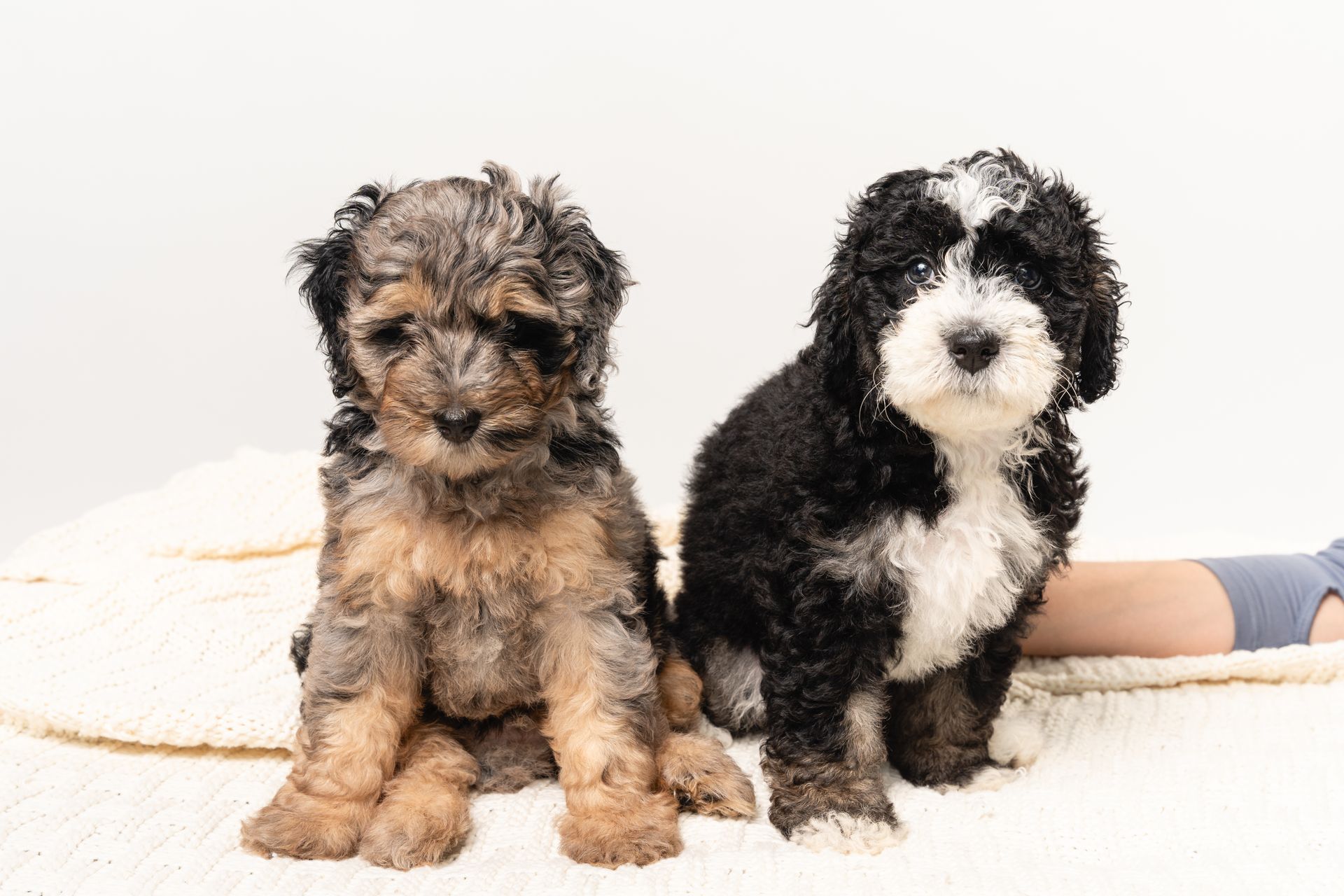
Because of these differences, two Bernedoodle puppies that are the same age can eventually grow into noticeably different-sized adult dogs.
Parent Size Is an Important Clue
One of the most useful pieces of information when estimating a Bernedoodle’s eventual size is the size of the parents.
Responsible breeders can often provide information about the parents’ adult weights, heights, and overall structure.
While parent size does not guarantee an exact adult size, it can give prospective owners a reasonable starting point for understanding the range they might expect.
For example, a puppy from larger parents may have a different expected adult size than a puppy from smaller parents.
This is one reason it is better to think about adult size as an expected range rather than a guaranteed number.
Bernedoodle Puppies Grow Quickly
The puppy stage is a period of rapid physical development.
You may notice changes almost every time you look at your Bernedoodle.
Their legs may seem longer from one week to the next. Their body proportions can change. Their paws may appear oversized. Their face can gradually develop a more mature appearance.
It is completely normal for puppies to go through awkward-looking growth stages.
A puppy may look somewhat lanky for a period of time before becoming more proportionate as they mature.
The First Few Months
During the earliest months, Bernedoodle puppies typically experience significant changes.
They are developing muscles, bones, coordination, teeth, and other physical systems while also learning how to interact with the world.
This is a period when owners should focus on providing appropriate care rather than trying to make their puppy grow faster.
A puppy’s body needs time to develop naturally.
Avoid comparing your puppy constantly with photographs or weights from other Bernedoodles.
Individual variation is normal.
Puppy Weight Is Not the Whole Story
The number on a scale is only one part of understanding your Bernedoodle’s development.
Two puppies can weigh the same amount but have different body structures.
One might be taller and leaner, while another may have a shorter or more substantial build.
Body condition, muscle development, proportions, energy levels, and overall health are also important considerations.
Your veterinarian can help you determine whether your puppy is growing appropriately for their individual situation.
Avoid Trying to Make a Puppy Grow Faster
Some owners may assume that giving a puppy more food will help them reach their adult size sooner.
That is not a good approach.
Puppies need appropriate nutrition for healthy development, but excessive feeding can contribute to excessive weight gain.
The objective is not to make a Bernedoodle as large as possible.
The objective is to support steady, healthy development.
Follow your breeder’s feeding recommendations and your veterinarian’s guidance regarding your individual puppy’s nutritional needs.
Reverse F1B Bernedoodle Size
Reverse F1B Bernedoodles are a particular generation that combines a higher percentage of Bernese Mountain Dog genetics with Poodle genetics.
Because breeding programs can differ, there is still variation in size among Reverse F1B Bernedoodles.
At Montana Berners, Reverse F1B Bernedoodles are described as approximately 75% Bernese Mountain Dog and 25% Standard Poodle, with estimated adult weights around 70–90 pounds for their current breeding program.
Prospective owners should still understand that an estimate is not a guarantee. Individual puppies can mature differently.
Why Paw Size Can Be Misleading
People sometimes look at a puppy’s paws and try to predict exactly how large the adult dog will become.
Large paws can certainly make a puppy look like they have plenty of growing left to do, but paw size alone is not a reliable way to calculate adult weight.
Genetics and the puppy’s overall growth pattern provide much more useful information.
Instead of trying to predict your puppy’s future from one physical feature, look at their development as a whole.
Growth Happens in Stages
Bernedoodle development is not perfectly linear.
Your puppy may grow rapidly for a period and then appear to slow down.
You may notice a period where their legs seem to grow before the rest of their body catches up.
Later, their chest, muscles, and overall body structure can continue developing.
This can make puppies look different from month to month.
Do not be surprised if your Bernedoodle seems slightly awkward during certain stages.
Growing puppies are still developing coordination and body awareness.
Height and Weight Are Different Measurements
When people talk about the size of a Bernedoodle, they often focus only on weight.
Height matters too.
A taller Bernedoodle may naturally weigh more than a shorter dog while still having a healthy body condition.
When discussing expected adult size with a breeder, ask about both height and weight when that information is available.
It can provide a more complete picture of what your future adult dog may look like.
Coat Changes Can Make Puppies Look Different
Bernedoodles can have a variety of coat types, and changes in the coat can affect how large a puppy appears.
A fluffy coat can make a puppy look considerably larger than their actual body size.
As the puppy coat changes, their appearance may also change.
This is another reason not to judge growth solely by photographs.
A freshly groomed Bernedoodle can look dramatically different from the same dog with a longer, fluffier coat.
The Adolescent Bernedoodle
As your puppy moves toward adolescence, physical growth continues while behavior can also change.
Your Bernedoodle may suddenly look much larger than they did only a few months earlier.
They may also begin developing more adult-like strength and coordination.
This is a good time to continue reinforcing the training and household routines you established during puppyhood.
A dog that was easy to pick up as a young puppy may eventually become a large dog that needs to understand how to move politely around people.
Growth and Training Should Develop Together
Size makes training especially important.
A small puppy jumping on someone may seem harmless.
The same behavior from a much larger Bernedoodle can become difficult for guests or family members to manage.
Teaching appropriate manners while your puppy is small can make the transition into a larger adolescent dog much easier.
Training should not wait until your Bernedoodle reaches adult size.
Growth Does Not Mean Your Dog Is Fully Mature
A Bernedoodle can reach much of their adult height before they are completely mature physically or behaviorally.
Body development can continue after the most obvious puppy growth has slowed.
This is another reason to avoid assuming that a larger-looking adolescent dog is automatically ready for every adult activity.
Your veterinarian can help you understand your individual dog’s developmental stage.
Monitor Your Bernedoodle’s Body Condition
Rather than obsessing over an exact weight, learn how your dog should look and feel at an appropriate body condition.
You should be able to feel your dog’s ribs without them being heavily covered by excess fat, while the overall body should maintain healthy proportions.
Your veterinarian can show you what an appropriate body condition looks like for your individual dog.
Regular veterinary appointments are useful because your dog’s growth can be evaluated alongside other aspects of their health.
Keep Track of Growth Without Obsessing
Keeping a simple record of your Bernedoodle’s growth can be interesting and useful.
You might record:
Age
Weight
Height
Major developmental milestones
Veterinary visits
Changes in feeding recommendations
Coat changes
Training progress
This gives you a record of how quickly your individual puppy developed.
It can also help you notice unexpected changes that are worth discussing with your veterinarian.
What If Your Puppy Seems Smaller or Larger Than Expected?
Variation does not automatically mean something is wrong.
Your Bernedoodle may be smaller or larger than another puppy of the same age for completely normal genetic reasons.
However, sudden changes in growth, significant weight loss, persistent poor appetite, unusual weakness, or other concerning symptoms should be discussed with a veterinarian.
Growth should be considered in the context of the entire dog rather than one isolated measurement.
Adult Size Can Affect Your Lifestyle
Before bringing home a Bernedoodle, think about the adult dog you are preparing to live with.
A puppy may fit comfortably in your lap, but that does not necessarily mean they will remain a small dog.
Consider whether you have enough room for an adult Bernedoodle, appropriate sleeping space, transportation options, and a plan for managing a larger dog.
Furniture, crates, collars, harnesses, beds, and other supplies may need to change as your dog grows.
Planning ahead makes the transition easier.
Expect Your Bernedoodle to Change
One of the fun parts of raising a Bernedoodle is seeing how much they change.
The puppy you bring home may eventually look dramatically different from the adult dog sleeping beside you.
Their face matures.
Their body becomes more substantial.
Their coat changes.
Their personality becomes more established.
Their movements become more coordinated.
Taking photographs throughout the process can be a great way to document those changes.
Don’t Compare Your Bernedoodle to Every Dog Online
Social media is full of puppy photographs, growth charts, and adult Bernedoodle measurements.
These can be interesting, but they can also create unrealistic expectations.
A Bernedoodle photographed at a certain age may come from completely different parents, genetics, breeding lines, or nutritional circumstances.
Online comparisons should never replace guidance from your breeder and veterinarian.
Your individual dog’s development is what matters.
Helping Your Puppy Grow Into a Healthy Adult
Supporting healthy growth is ultimately about providing appropriate care throughout puppyhood.
That includes:
Feeding an appropriate diet
Maintaining regular veterinary care
Following vaccination and preventive-care recommendations
Providing age-appropriate activity
Continuing training
Allowing adequate rest
Monitoring body condition
Providing safe living conditions
Watching for unusual changes
There is no need to rush development.
A healthy puppy does not need to become an adult overnight.
Final Thoughts on Bernedoodle Growth and Size
Bernedoodle puppies can change quickly during their first year, and understanding their growth stages can help owners enjoy the process without becoming overly focused on an exact adult weight.
Because Bernedoodles vary in genetics, generation, parent size, and individual development, adult size is best viewed as an expected range rather than a guaranteed number.
For Reverse F1B Bernedoodles, such as those bred by Montana Berners, the expected adult size can be influenced by the particular breeding program and parent dogs. Montana Berners currently describes its Reverse F1B Bernedoodles as approximately 70–90 pounds at adulthood.
Most importantly, focus on steady development, appropriate nutrition, veterinary guidance, healthy body condition, and good habits.
Your Bernedoodle’s journey from puppy to adult is unique. Enjoy the oversized paws, awkward growth stages, changing coat, and all the little milestones along the way.
Read Next: Bernedoodle Puppy Teething Guide: What to Expect and How to Help