
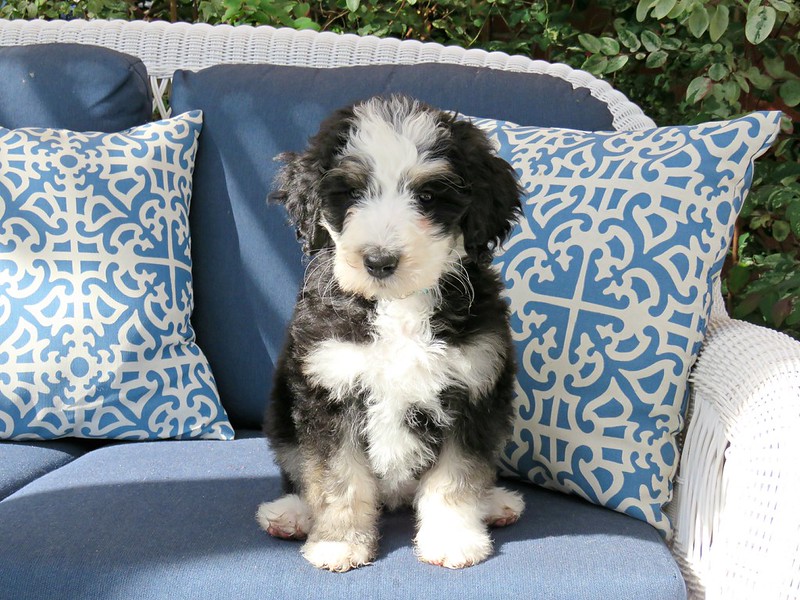
Bernedoodle Exercise Needs: How Much Activity Does Your Dog Really Need?
Bernedoodles are often described as affectionate, intelligent family dogs, but they also need regular physical and mental activity to stay happy and well-adjusted. Because Bernedoodles can vary significantly in size, age, energy level, and personality, their exercise needs are not exactly the same from one dog to another.
A young Bernedoodle puppy has different exercise requirements than an adult Standard Bernedoodle. Likewise, a calm dog may need a different routine than an energetic dog that constantly looks for something to do.
The goal is not to exhaust a Bernedoodle every day. Instead, owners should provide an appropriate balance of movement, play, training, exploration, and rest.
Understanding how to exercise a Bernedoodle properly can help prevent boredom while also protecting a growing puppy from excessive physical strain.
Why Bernedoodles Need Regular Exercise
The Bernedoodle’s parent breeds both have working histories.
Bernese Mountain Dogs were developed as versatile working dogs on Swiss farms, while Poodles were bred for active retrieving work and are known for their intelligence and athletic ability.
Although today’s Bernedoodle may primarily be a family companion, those characteristics can still influence how much activity an individual dog enjoys.
Regular exercise can help a Bernedoodle:
Maintain a healthy body weight
Build and maintain muscle
Release excess energy
Explore its environment
Practice good behavior
Reduce boredom
Receive mental stimulation
Spend quality time with its family
Exercise is therefore about more than taking a dog for a walk. It is an important part of a Bernedoodle’s overall lifestyle.
How Much Exercise Does a Bernedoodle Need?
There is no single number of minutes that applies to every Bernedoodle.
Age, size, health, conditioning, weather, and personality all matter.
An adult Bernedoodle may enjoy one or more daily walks combined with play and other activities. A puppy, however, needs shorter periods of activity with plenty of opportunities for sleep and recovery.
Owners should gradually increase activity as a dog matures rather than assuming a young puppy should exercise like an adult.
If a Bernedoodle appears excessively tired, struggles to keep up, becomes reluctant to move, or develops another concerning symptom after activity, stop and consult a veterinarian.
Bernedoodle Puppies Need Plenty of Rest
One of the biggest mistakes new puppy owners can make is assuming that a tired puppy is always a well-exercised puppy.
Young dogs need substantial amounts of sleep as they grow and develop.
A puppy may play enthusiastically for several minutes and then suddenly become exhausted.
This is normal.
Instead of trying to keep a puppy active throughout the day, provide short periods of age-appropriate play and exploration followed by quiet time.
A balanced puppy routine might include:
Breakfast
Short potty break
Gentle play
Short training session
Nap
Another potty break
Brief exploration
Quiet time
Meal
More rest
The exact routine will vary, but the principle is simple: activity and rest should work together.
Avoid Overdoing Exercise With Growing Bernedoodles
Bernedoodle puppies can be playful and energetic, but their bodies are still developing.
Excessive forced exercise can place unnecessary stress on developing bones and joints.
This is particularly important for larger Bernedoodles.
Rather than pushing a puppy to complete long-distance runs, extended hikes, or repetitive high-impact activities, allow the puppy to move naturally and explore at an appropriate pace.
Short walks, supervised play, training games, and gentle exploration can provide plenty of enrichment.
When in doubt about how much structured exercise is appropriate for a growing puppy, discuss the dog’s individual development with a veterinarian.
Walking With Your Bernedoodle
Walking is one of the simplest ways to provide exercise.
It also offers mental stimulation because dogs experience the world through their senses.
A Bernedoodle can encounter new smells, sights, sounds, surfaces, and environments during a walk.
For puppies, a walk should not necessarily be about covering a specific distance.
A short walk with plenty of time to safely sniff and explore can be more valuable than rushing through a longer route.
For adult Bernedoodles, owners can gradually increase the duration and variety of walks based on the dog’s fitness level.
Let Your Bernedoodle Sniff
Sniffing is not wasted time.
Dogs rely heavily on their sense of smell to understand their surroundings.
Allowing a Bernedoodle to stop and investigate interesting scents provides mental stimulation in addition to physical movement.
A walk where the dog is constantly pulled forward may provide exercise, but it can eliminate one of the most enriching parts of the experience.
When the environment is safe, allowing some controlled sniffing can make walks more rewarding.
Owners can also use designated “sniff walks” where the goal is exploration rather than covering as much distance as possible.
Play Is Excellent Exercise
Play can be an important part of a Bernedoodle’s daily activity.
Games such as fetch can encourage movement while strengthening the relationship between dog and owner.
Tug can also be an enjoyable game when taught with appropriate rules.
Short games of chase, retrieving, or toy searching can provide variety.
The important thing is to avoid turning every game into an extremely intense physical workout, particularly for puppies.
Play should remain appropriate for the dog’s age, size, and physical condition.
Mental Exercise Can Tire a Bernedoodle Too
Physical exercise is only one part of keeping a Bernedoodle satisfied.
Mental stimulation can be equally valuable.
Training sessions require concentration.
Puzzle toys require problem-solving.
Scent games encourage dogs to use their noses.
Learning new tricks requires attention and memory.
These activities can help provide an outlet for an intelligent Bernedoodle without requiring hours of physical exertion.
For some dogs, a few minutes of focused mental work can be surprisingly tiring.
Teach Your Bernedoodle New Tricks
Learning new behaviors is an easy way to combine training and mental stimulation.
Once a Bernedoodle understands basic commands, owners can introduce more advanced tricks.
Examples include:
Spin
Touch
Place
Find it
Wave
Back up
Go to bed
Retrieve a specific toy
Put a toy away
Training does not have to be complicated.
The objective is to make the dog think, communicate with its owner, and earn rewards for appropriate behavior.
Try Scent Games
Bernedoodles can enjoy activities that encourage them to search using their noses.
One simple game is to hide a favorite toy or treat in an easy-to-find location and encourage the dog to search.
As the dog becomes more experienced, owners can gradually make the hiding spots more challenging.
Another option is to place treats under or inside appropriate puzzle toys.
Always supervise toys and food-based enrichment to ensure the activity is safe for the individual dog.
Outdoor Activities for Bernedoodles
Many adult Bernedoodles enjoy outdoor adventures with their families.
Depending on the dog’s size, fitness, age, and health, appropriate activities might include:
Longer walks
Hiking
Exploring dog-friendly trails
Retrieving games
Outdoor training
Swimming where safe
Camping with proper preparation
However, not every Bernedoodle will enjoy every activity.
A dog should be introduced to new activities gradually.
A Bernedoodle that has never hiked should not immediately be expected to complete a long mountain trail.
Build endurance over time.
Swimming With a Bernedoodle
Some Bernedoodles may enjoy swimming, particularly given the Poodle’s historical association with water retrieving.
However, owners should never assume that every Bernedoodle is naturally comfortable in water.
Introduce swimming gradually and safely.
Use a properly fitted canine life jacket when appropriate, especially around unfamiliar or open water.
Never force a nervous dog into water.
Always supervise swimming, even if the dog appears confident.
Afterward, rinse and dry the coat appropriately, particularly if the dog has been swimming in salt water or chemically treated water.
Hiking With an Adult Bernedoodle
Hiking can be an excellent combination of exercise and mental stimulation for an appropriately conditioned adult Bernedoodle.
The dog gets physical activity while experiencing changing terrain, smells, and surroundings.
Before taking a Bernedoodle on a longer hike, owners should gradually build endurance through shorter walks.
Consider the terrain as well.
Rocky, steep, hot, or uneven trails require more physical effort than a flat path.
Owners should also bring adequate water and take breaks as needed.
Be Careful With Hot Weather
Bernedoodles can be particularly uncomfortable in hot conditions because of their dense coats.
Owners should be cautious when exercising during warm weather.
Avoid strenuous activity during the hottest part of the day.
Early morning or evening can be more comfortable.
Pay attention to pavement temperatures as well. Surfaces that feel manageable to a person wearing shoes can become uncomfortably hot for a dog’s paw pads.
Signs of overheating can include excessive panting, weakness, drooling, confusion, vomiting, or collapse.
If a dog shows signs of heat-related illness, stop exercising and seek veterinary assistance immediately.
Montana Weather and Bernedoodle Exercise
Bernedoodles living in Montana may experience significant seasonal changes.
Cold weather does not automatically mean a Bernedoodle cannot exercise outdoors, but conditions should be evaluated carefully.
Snow, ice, freezing temperatures, and harsh wind can affect paws and overall comfort.
Some Bernedoodles may enjoy playing in snow, while others prefer shorter outdoor sessions followed by indoor activities.
During extreme weather, owners can shift more exercise indoors through training games, puzzle toys, scent activities, and supervised play.
Exercise Your Bernedoodle’s Brain Indoors
Bad weather does not have to mean a boring day.
Indoor activities can provide meaningful enrichment.
Try hiding treats around a safe room and encouraging the dog to find them.
Practice obedience commands.
Teach a new trick.
Use a food puzzle.
Play a controlled game of tug.
Practice settling on a mat.
Work on impulse control around toys and food.
These activities can help maintain a routine even when outdoor exercise is limited.
Don’t Confuse Hyperactivity With a Need for More Exercise
Sometimes owners see a restless Bernedoodle and assume the dog needs more physical activity.
That is not always the case.
A puppy that becomes extremely wild, starts biting, runs around the house, or refuses to settle may actually be overtired.
Young puppies often need a nap rather than another hour of exercise.
This is why owners should learn to distinguish between genuine excess energy and a dog that needs rest.
A balanced schedule can help.
Build Exercise Gradually
If your Bernedoodle has been relatively inactive, do not suddenly double its daily activity.
Increase exercise gradually.
For example, an adult dog accustomed to short walks may benefit from gradually extending those walks rather than immediately beginning long hikes.
This allows muscles and cardiovascular fitness to develop progressively.
Dogs recovering from illness, injury, or surgery should follow veterinary recommendations rather than an owner’s independent exercise plan.
Watch Your Bernedoodle During Exercise
Your dog’s behavior provides useful information.
A healthy, appropriately conditioned dog should generally be able to participate comfortably in its normal activities.
Pay attention to changes such as:
Reluctance to walk
Limping
Unusual stiffness
Excessive fatigue
Difficulty breathing
Repeatedly sitting or lying down
Sudden changes in gait
Reluctance to climb stairs
Persistent coughing
These signs should not simply be dismissed as the dog being lazy.
If something seems unusual, stop the activity and consult a veterinarian.
Exercise Should Be Fun
Bernedoodles are companion dogs, and spending time with their owners can be one of the most rewarding parts of their day.
Exercise does not need to feel like a chore.
Change routes.
Try new training games.
Play fetch.
Explore a safe new environment.
Practice tricks.
Take a relaxed sniffing walk.
Rotate toys.
The more variety an owner provides, the less likely the dog’s daily routine becomes repetitive.
Create a Balanced Bernedoodle Routine
A good routine combines several types of activity.
For example, an adult Bernedoodle might have a morning walk, some independent enrichment during the day, a short training session, and another walk or play period in the evening.
A puppy might have several brief activity periods separated by naps.
The correct routine depends on the individual dog.
The goal is to meet the dog’s physical and mental needs without creating excessive fatigue or unnecessary strain.
Final Thoughts on Bernedoodle Exercise
Bernedoodles benefit from regular activity, but the best exercise routine is not necessarily the one that makes a dog physically exhausted.
Walking, play, training, scent games, exploration, and age-appropriate outdoor activities can all contribute to a healthy lifestyle.
Puppies require special consideration because they are still developing and need plenty of rest. Adult Bernedoodles can gradually participate in longer and more demanding activities as their fitness improves.
Owners should also pay attention to weather conditions, especially heat, and watch for any changes in movement, energy, or comfort.
Most importantly, exercise should strengthen the relationship between a Bernedoodle and its family.
A daily walk, a training game, or a few minutes of play can provide much more than physical activity. It gives a Bernedoodle an opportunity to explore, learn, interact, and spend meaningful time with the people it loves.
Read Next: What Should You Feed a Bernedoodle? A Practical Guide to Bernedoodle Nutrition